Matapaki Atamai Hangahanga

Promoting reflective and interactive learning with AI conversations

Background:

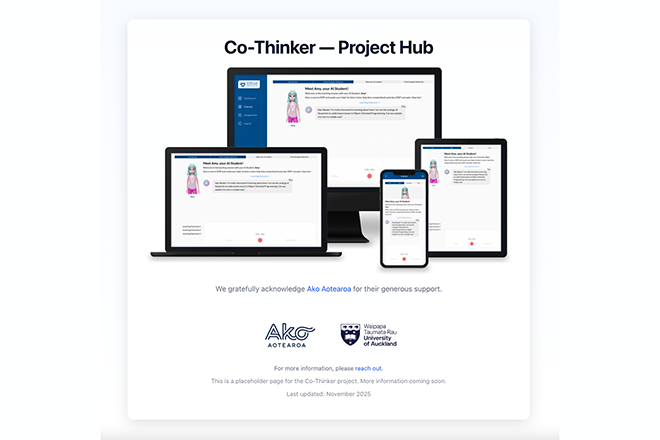
This project led by Dr Nasser Giacaman from the University of Auckland has designed, and is trialling two types of AI-powered verbal conversational assessments:

  • Reflection: Where the AI engages students in real-time dialogue
  • AI Student: Where through role reversal, student will play the role of tutor who will ‘teach the AI’.

By integrating verbal conversational AI, the research aims to create a more engaging and interactive environment that encourages deeper reflection and sustains deeper student interest. The timely and personalised responses from the AI will prompt students to think and reflect deeply about the subject matter, developing critical thinking skills. 

The role reversal (AI student) will enable a novel learning assessment type that helps students better articulate their course learning material learning and reinforce their learning by teaching others.

The Co-thinker project hub will be updated by the project team in the coming months with project videos, resources and news updates. 

The Co-thinker Project Hub

https://co-thinker.digitaledu.ac.nz/

The Co-thinker project hub will include

  • A short introduction/overview of Co-thinker, what it has been designed to achieve and the benefits to both students and educators
  • A demo of the student experience – the Reflection and AI student modules, demonstrate how they interact with it (speech, text, reo Māori options), any immediate feedback provided
  • A demo of the educator experience – how it can be set up to assess learner outcomes.
Presentation at the 2024 Ranga Auaha Ako Research Hui

Project leader Nasser Giacaman, Piata Allen, and Raina Song gave a presentation about their project at the Ranga Auaha Ako (University of Auckland’s Education Office) Research Hui in October 2024.


Co-funded by the Ako Aotearoa Research and Innovation Agenda (AARIA)
Posted in Artificial Intelligence (AI) and GenAI tools | Leave a comment

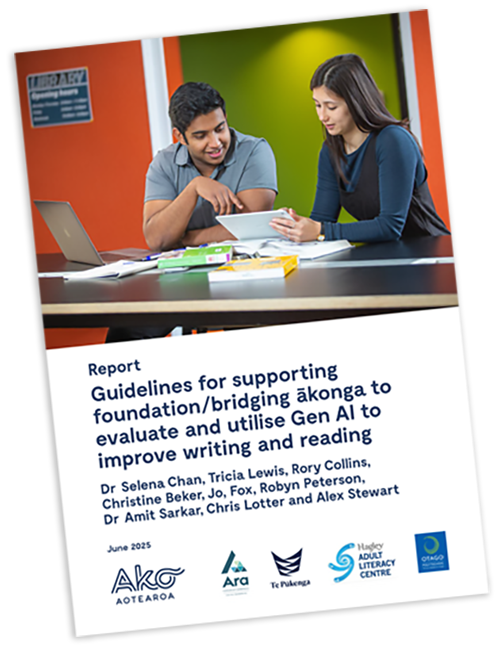
Guidelines for supporting foundation/bridging ākonga to evaluate and utilise Gen AI to improve writing and reading

The report presents the rationale, research processes, findings and details for the development of an AI chatbot to support the attainment of academic writing skills by bridging and foundation ākonga.

Gen AI provides many opportunities, when used appropriately, for supporting bridging/foundation ākonga and their kaiako. This report could be used as a start towards informing how Gen AI can be utilised to underpin a shift towards more ako and ākonga-centred learning.

Download the report:

Background:

This research project, led by Dr Selena Chan from Ara Institute of Canterbury, was completed in June 2025.

This project investigates the specific challenges, impacts, and potentials of utilising Gen AI to support the learning of reading and writing or beginning te reo Māori for Aotearoa foundation and bridging ākonga.

The integration of Gen AI into the ako of foundation/bridging programmes, requires careful learning design. The main goal of these programmes is to ensure ākonga attain the academic literacy skills necessary for further study or work.

There is a need to ensure that Gen AI supports academic literacies without compromising ākonga engagement with the deliberate practice required to attain the literacy skills.


Co-funded by the Ako Aotearoa Research and Innovation Agenda (AARIA)
Posted in Artificial Intelligence (AI) and GenAI tools | Leave a comment

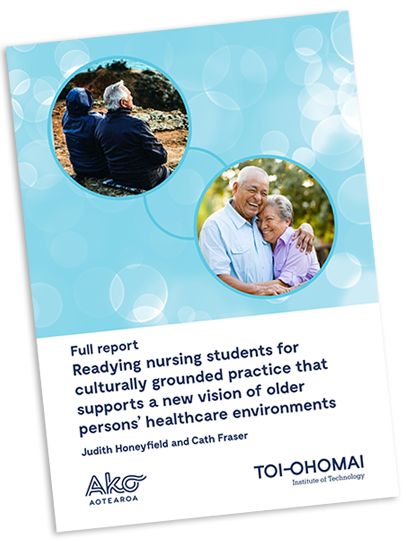
Readying nursing students for culturally grounded practice that supports a new vision for older persons’ healthcare environments

This report identifies a number of key themes from interviews with older persons in aged care, nursing students and nursing educators which could offer a possible tool for educators moving students from personal reflection to application of cultural consciousness with real-life examples.

Download the report:

Supporting videos

Interviews with research participants talking about their health and ageing journeys. 

Background:

This project was completed in June 2025 by Dr Judith Honeyfield and Cath Fraser from Toi Ohomai Institute of Technology.


Co funded by the Ako Aotearoa Research and Innovation Agenda (AARIA)
Posted in Industry specific resources | Leave a comment

The impact of Te Atakura on teaching practice

Can a focus on ākonga Māori learning experiences positively impact on the learning experiences for all ākonga?

Te Atakura is a culturally responsive relationships-based approach, guided by kaupapa Māori values, towards achieving ōritetanga within Tertiary Education in New Zealand.

This report contains observation data from educators/kaiako at UCOL progressing on their Te Atakura journey.

Download the report:

Background:

This project was completed in December 2025 by Tim Seaholme, Janell Kiriona and Erin Lincoln from UCOL | Te Pūkenga.


This project was co-funded by the Ako Aotearoa Research and Innovation Agenda (AARIA)
Posted in Inclusive teaching, Māori learner success | Leave a comment

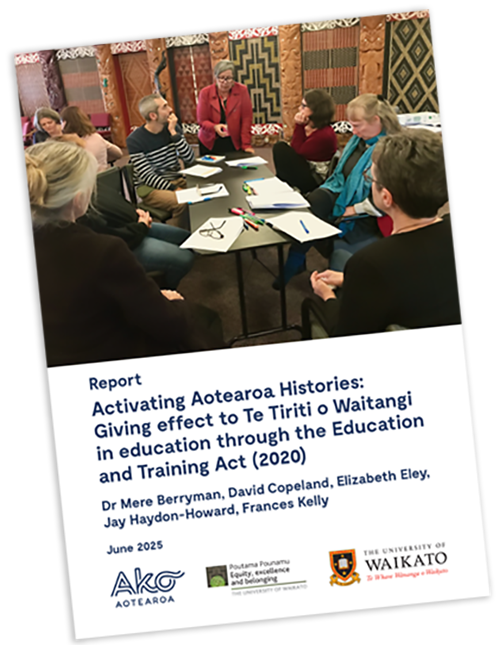
Activating Aotearoa histories

Giving effect to Te Tiriti o Waitangi in education through the Education and Training Act (2020)

This report shares the experiences of participants involved in the Poutama Pounamu Blended Learning (PPBL) Programme – a professional learning and development initiative with educators from Te Kura Toi Tangata, the Faculty of Education at the University of Waikato – and how that has influenced their underlying cultural beliefs and attitudes.

It highlights four main themes that emerged in relation to how this programme had influenced and changed their own praxis, which may be of benefit to other educators, or tertiary education organisations.

Download the report:

Watch videos:

These videos were created as part of an in-depth inquiry into the effectiveness of Poutama Pounamu Blended Learning (PPBL) with staff at Waikato University.

The PPBL Programme content is framed around opportunities for participants to engage in and learn through the following three processes: to know self, to grow self and to grow community.

To truly ‘know self’ required the sharing of knowledge in safe spaces where critical reflections on one’s own experiences, together with curiosity and increased self-awareness, can contribute to self-directed learning that can result in an increased sense of self.
Once the know-self conversation had begun and safe spaces were available to have these conversations with other similarly curious and increasingly self-aware individuals, the learning was able to continue. Often the most challenging conversations were able to be had with colleagues and friends, about subject matters that previously had never been considered.
To grow community means being proactive with this learning and taking it to the wider level of reform, whether it was growing one’s classroom praxis or one’s professional community. This requires understanding the cultural contexts in which we work and understanding our own agency and power, and the power and influence of our society and professional institutions.

Background:

This project was completed in June 2025 by Dr Mere Berryman, David Copeland, Elizabeth Eley, Jay Haydon-Howard and Frances Kelly from the University of Waikato.


Co-funded by the Ako Aotearoa Research and Innovation Agenda (AARIA)
Posted in Inclusive teaching, Māori learner success | Leave a comment

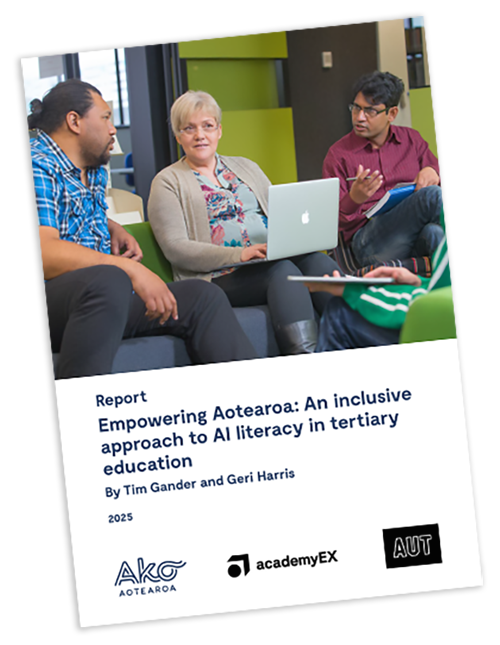
Empowering Aotearoa: An inclusive approach to AI literacy in tertiary education

This report synthesises the design, implementation, and evaluation of InclusiveAI.nz, a website with resources intended to support inclusive approaches to assessment in Aotearoa New Zealand by building AI literacy for diverse ākonga and for educators.

The recommendations highlight the importance of co-designing resources with learners to enhance engagement and relevance, and discusses assessment approaches that clarify AI use and promote student confidence and competence. ​

Download the report:

Background:

This project was completed in December 2025 by Tim Gander from academyEX and Geri Harris from AUT.

InclusiveAI.nz is a website with resources intended to support inclusive approaches to assessment in Aotearoa New Zealand by building AI literacy for diverse ākonga and for educators.

Visit the Inclusive AI Web Portal | https://inclusiveai.nz/


Co-funded by the Ako Aotearoa Research and Innovation Agenda (AARIA)
Posted in Artificial Intelligence (AI) and GenAI tools | Leave a comment

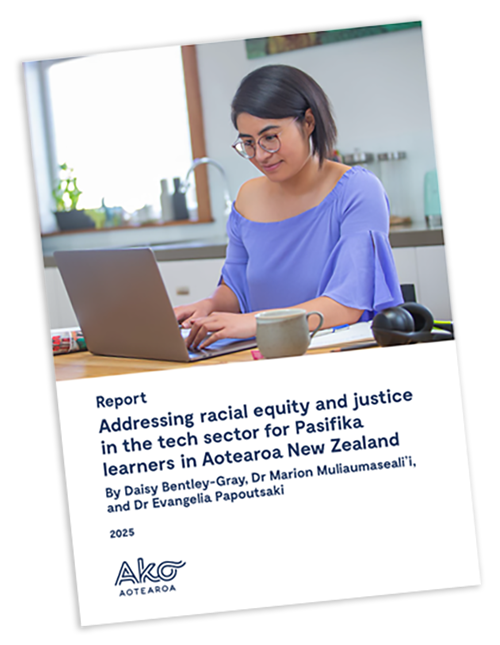
Addressing racial equity & justice in the tech sector for Pasifika learners in Aotearoa New Zealand

This report supports enhancing representation, addressing systemic inequities and fostering culturally grounded educational and professional opportunities for Pasifika people in technology sector education.

Centered on culturally relevant learning, mentoring, inclusive industry practices, and robust community engagement, the recommendations focus on aligning educational pathways and career development with Pasifika values and lived experiences.

Download the report:

Background:

This research project was completed in December 2025 by Daisy Bently-Gray, Dr Marion Muliaumaseali’i and Dr Evangelia Papoutsaki from Unitec.

It provides insights into the experiences of Pasifika people in the technology sector and education, highlighting the complex interplay between cultural values, systemic barriers, and innovative solutions.

To create a more inclusive and equitable digital education and technology sector in Aotearoa New Zealand, it is essential to recognise and uplift the unique strengths, cultural knowledge, and aspirations of Pasifika communities.


Co-funded by the Ako Aotearoa Research and Innovation Agenda (AARIA)
Posted in Inclusive teaching, Pacific learner success | Comments Off on Addressing racial equity & justice in the tech sector for Pasifika learners in Aotearoa New Zealand

Circles of Knowledge

Engaging Strategies for Teaching and Learning

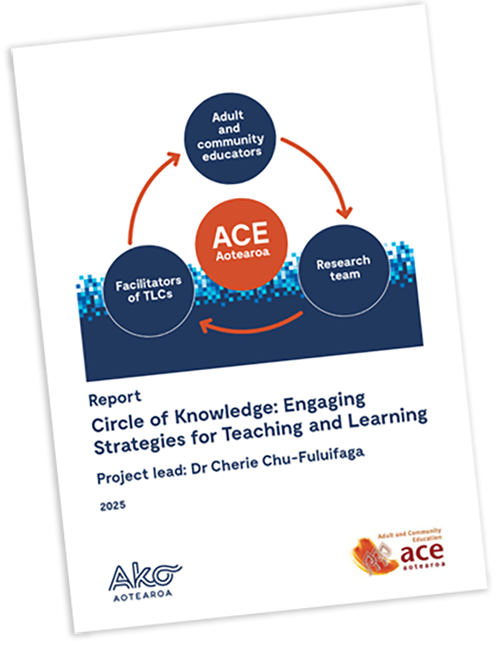
Teaching and Learning Circles (TLCs) are an inclusive and collaborative form of professional learning that prioritise reflection, dialogue, and shared inquiry.

The project report offers insights and recommendations for educational leaders, facilitators, and practitioners committed to developing reflective and contextually relevant professional learning communities.

Download the report:

Background:

This report was completed in November 2025 by Dr Cherie Chu-Fuluifaga and the project team from ACE Aotearoa.

The project examined the implementation and impact of TLCs in ACE contexts.

Drawing on literature and practice-based evidence, this report highlights how TLCs contribute to educator growth, enhance teaching quality, and support culturally responsive practice.


Co-funded by the Ako Aotearoa Research and Innovation Agenda (AARIA)
Posted in Professional learning | Leave a comment

In the starting blocks

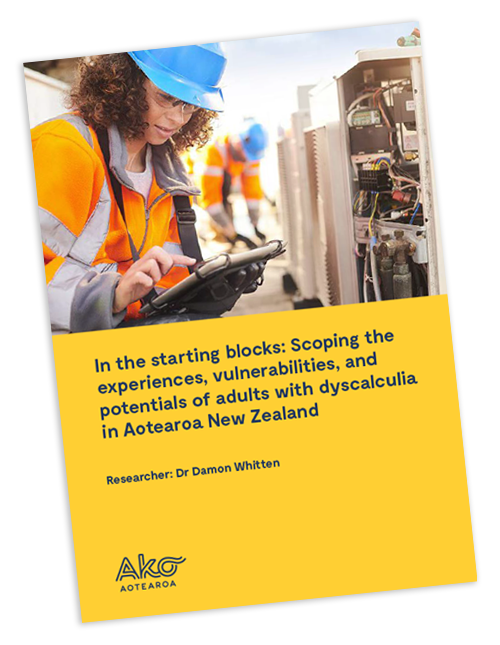
Scoping the experiences, vulnerabilities and potentials of dyscalculic adult learners in Aotearoa New Zealand

This report outlines recommendations that can be implemented in the tertiary sector – including the development of a New Zealand Dyscalculia Knowledge Hub, and the development of educational policy to support professional development in the domain of dyscalculia.

This study has also identified several research areas that would be valuable to explore in the future.

Download the report:

Supporting video:

This video is a summary of the school experiences of adults with dyscalculia in Aotearoa New Zealand, presented by researcher Dr Damon Whitten.

16 interviews were conducted as a part of a project investigating adults with Dyscalculia. The participants were asked about their life experiences, learning histories, and the challenges they faced.  

Background:

This study, completed in November 2024 by Dr Damon Whitten, explored the life experiences of dyscalculic adults in New Zealand with the aim to shed some light on their often-unseen challenges and vulnerabilities.


Co-funded by the Ako Aotearoa Research and Innovation Agenda (AARIA)
Posted in Neurodiversity | Leave a comment

Le Niu project

Strengthening and supporting Pacific education pathways and communities

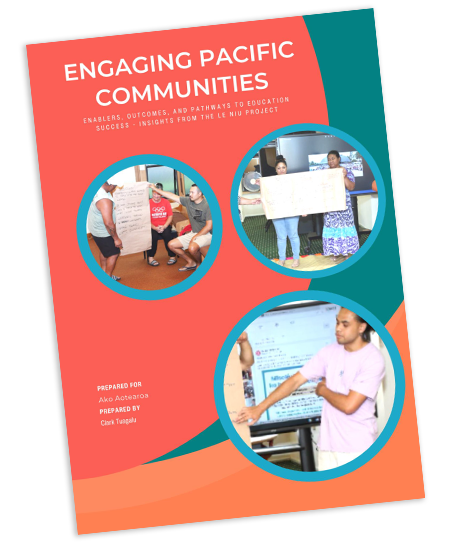
This report highlights the significance of culturally safe and inclusive approaches to community engagement. 

The recommendations emphasise the importance of transparent and inclusive communication strategies, adequate resource allocation, collaborative partnerships, capacity building, and culturally responsive practices.

By embracing these recommendations, organisations, and individuals can create a supportive and empowering environment for Pacific communities, driving positive change and addressing their unique needs.

Download the report:

Background:

The Le Niu Project was completed in June 2025. It aimed to empower and uplift Pacific communities, particularly those in underserved areas, by fostering community engagement, partnership, and education support.

Report prepared by Clark Tugalu.


Co-funded by the Ako Aotearoa Research and Innovation Agenda (AARIA)
Posted in Pacific learner success | Leave a comment

Scoping the integration of AI in adult tertiary education

An equitable and outcome-focused approach in Aotearoa New Zealand

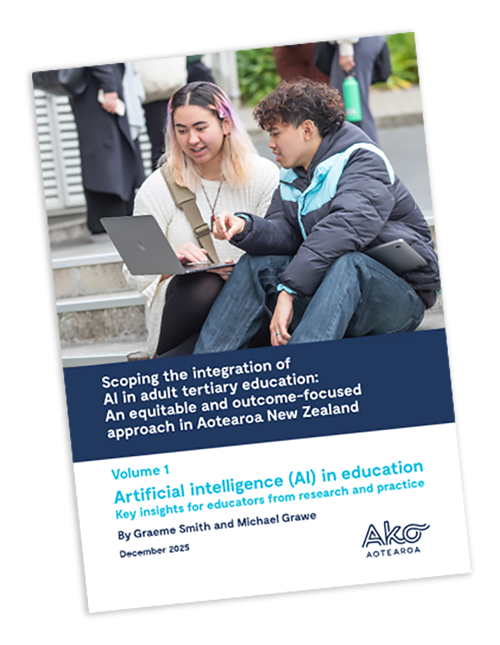
As a scoping study, this project outlines the current landscape, focusing on the challenges and opportunities AI presents for institutions such as Private Training Establishments (PTEs), Institutes of Technology and Polytechnics (ITPs), and universities.

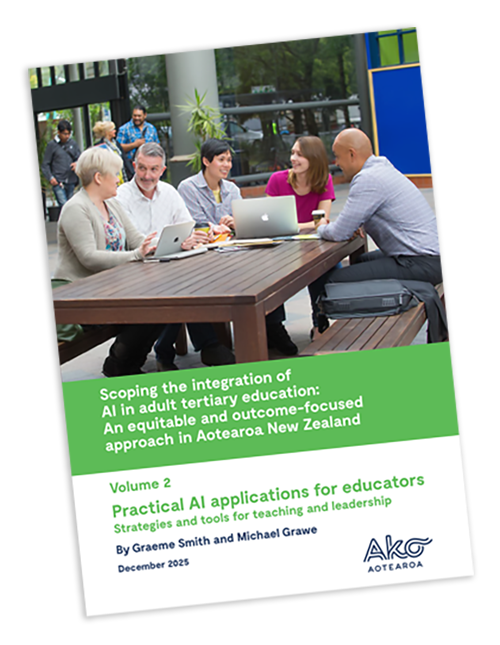
This project has led to the creation of 3 guides.

Resource download:

Volume 1 – Artificial intelligence (AI) in education

Volume 1 offers an in-depth exploration of artificial intelligence’s (AI) evolving role in education, with a focus on Aotearoa New Zealand’s diverse tertiary sector. These insights reveal both the opportunities and challenges of integrating AI into tertiary education settings.

Download volume 1 (PDF, 800Kb)

Volume 2 – Practical AI applications for educators

Volume 2 equips educators, leaders, and policymakers with practical strategies for integrating AI into teaching and administration. Educators will find tools, approaches, and step-by-step guidance to support the effective and ethical use of AI in classrooms and beyond.

Download Volume 2 (PDF, 2Mb)

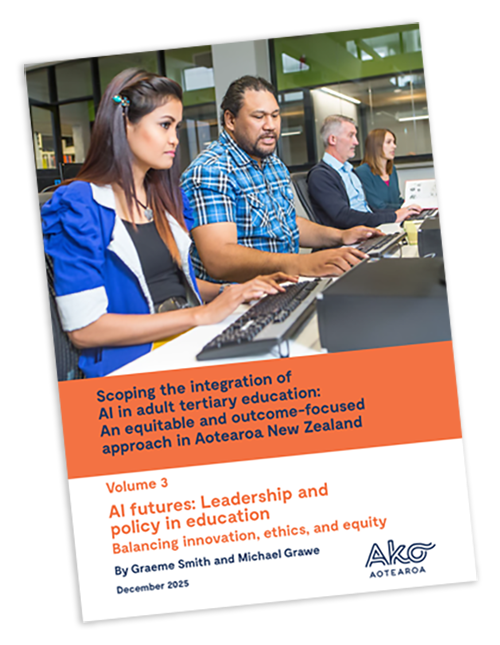
Volume 3 – Leadership and policy in education

Volume 3 shifts the focus to leadership and systemic change, this volume aims to equip education leaders with the tools to develop inclusive policies, design responsible AI frameworks, and address equity challenges in the evolving educational landscape.

Download Volume 3 (PDF, 1Mb)

Background:

As AI continues to reshape education, its successful integration hinges on thoughtful planning, ethical frameworks, and a commitment to inclusivity. While AI offers transformative potential, its benefits must be equitably distributed, ensuring that underserved communities are not left behind. Educational institutions have a responsibility to embed cultural responsiveness into AI tools and practices, particularly in diverse settings like Aotearoa New Zealand.

This project, completed in 2025, aimed to build educator, and organisational capability with using AI tools.

Resources prepared by Graeme Smith and Michael Grawe.


Co funded by the Ako Aotearoa Research and Innovation Agenda (AARIA)
Posted in Artificial Intelligence (AI) and GenAI tools | Leave a comment