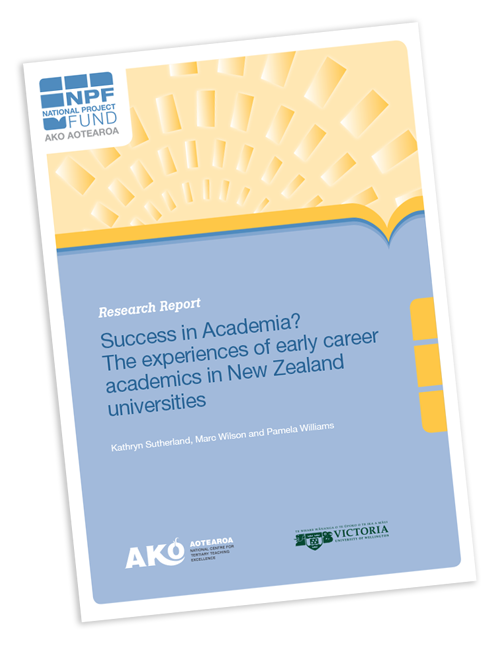
Success in academia? The experiences of early career academics in New Zealand

This report summarises the key findings from a project that investigated the work experiences of early career academics at eight New Zealand universities.

The study aimed to find out which factors influence the productivity and satisfaction of early career academics in New Zealand universities, and to identify what resources and support might be necessary to enhance the academic career experience of those just starting out.

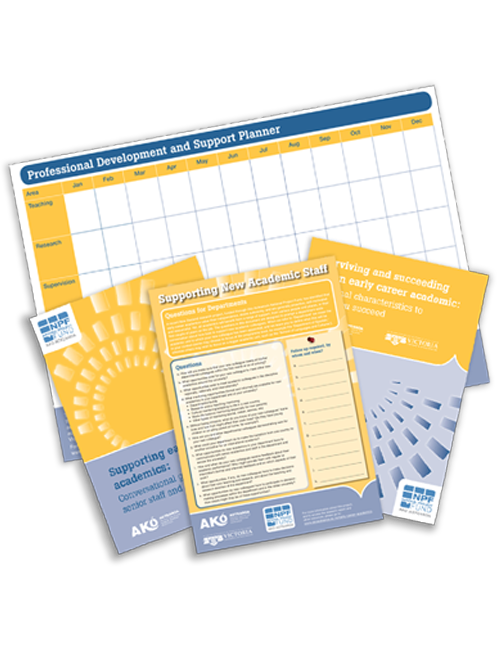
A set of resources has been developed to support early career academics and anyone involved in supporting them.

Download the report:

Resource download:

Background:

A three-year project, completed in 2013 at Victoria University of Wellington, to examine the experiences of early career academics within eight universities in New Zealand.

Report prepared by Kathryn Sutherland, Marc Wilson and Pamela Williams.


Co-funded by the Ako Aotearoa National Project Fund (NPF)
Posted in Strategic leadership and change | Leave a comment

The Success and impact of early career academics in two New Zealand tertiary institutions

This report details an investigation to identify the influences on and barriers to success of Early Career Academics in NZ tertiary institutions.

A printable leaflet was also created for early career academics to use for self reflection and planning.

Resource download:

Background:

A project, completed in 2010, to examine the experiences of Early Career Academics (ECAs) and identify the processes that contribute to the induction, preparation and meaningful socialisation of ECAs who will be capable of enhancing their students’ educational outcomes and their own academic careers. This project uncovers the experiences of sixteen ECAs at two New Zealand tertiary institutions.

A collaboration of Victoria University of Wellington and Eastern Institute of Technology.

Report prepared by Kathryn Sutherland and Lesley Petersen.


Co-funded by the Ako Aotearoa Regional Hub Project Fund (RHPF)

Posted in Strategic leadership and change | Leave a comment

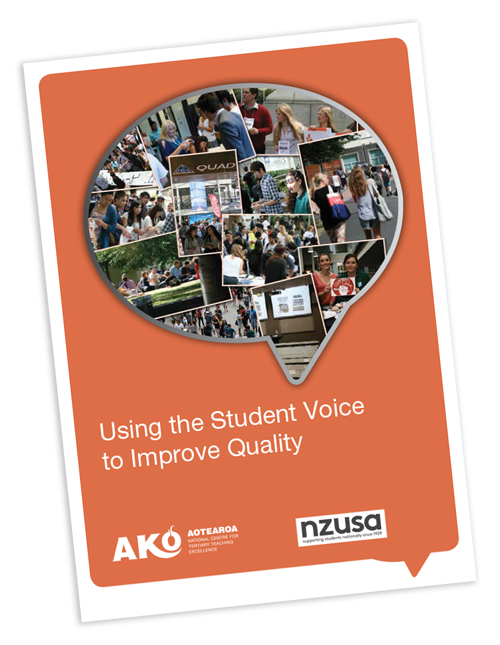
The student voice in tertiary education settings

Quality systems in practice

This report, and accompanying guides, explore features and indicators of good practice to ensure that student voice is an input into organisational decision making from nine tertiary organisations across New Zealand.

They also include a set of ‘reflective questions’ that management, staff, students’ associations and the wider student body can use to consider and discuss how their organisation uses the student voice for quality assurance and enhancement.

Resource download:

Background:

Representative systems can offer students the opportunity to engage with, and have input into governance, decision making and quality enhancement at all levels within tertiary education organisations.

This year-long project, completed in 2013, aimed to find out how tertiary organisations can effectively use the voice of students to improve quality of provision. It did this through an examination of specific processes designed to ensure that student voice is an input into organisational decision making.

A collaboration of Ako Aotearoa, the New Zealand Union of Students’ Associations and Heathrose Research Ltd.

Resources prepared for Ako Aotearoa and the New Zealand Union of Students’ Associations by Heathrose Research.


Co-funded by the Ako Aotearoa National Project Fund (NPF)
Posted in Strategic leadership and change | Leave a comment

Towards retention: The role of assessment, motivation and prior knowledge in learner completion

This report details an investigation into how assessment processes affect student motivation and course completion in a workplace-based learning course.

Download the report:

Background:

A project, completed in 2008, that aimed to investigate whether the competency-based assessment used in unit standards promotes student completion, and how competency-based assessment can be improved to better meet the needs of learners in the workplace-based National Certificate in Public Sector Services course.

A collaboration of Learning State, Auckland University of Technology and Statistics New Zealand.

Report prepared by Sharleen Forbes, Murray Black, Karen Moses, Nathaniel Pihama, Neil Bechervaise and Kimberly Cullen.


Co-funded by the Ako Aotearoa Regional Hub Project Fund (RHPF)

Posted in Student engagement | Leave a comment

Tools for enabling developmental feedback and teamwork grading by peer assessment

These resources will help teachers familiar with peer assessment software to use the Xorro-Q platform for managing peer assessment activities using Peer Assess Pro.

While these guides are specific to the Peer Assess Pro software, which may now be out of date, the recommendations may be of use for those wishing to use other online tools for providing feedback to students participating in teamwork.

Resource download:

Supporting video:

The video presents a fast fly-by of a digitally-enabled solution addressing common issues that arise from group work in higher education, such as team-based learning (TBL).

Background:

A one-year project, completed in 2019, to enhance the usability of the Peer Assess Pro tool and extend the impact of the system through expanding adoption of the tool amongst tertiary institutions. A collaboration of Unitec Institute of Technology and Peer Assess Pro Limited.

Resources prepared by Peter Mellalieu and Patrick Dodd.


Co-funded by the Ako Aotearoa Regional Hub Project Fund (RHPF)

Posted in Assessment | Leave a comment

Tutors and learners: Partners in innovation

This report offers good practice guidelines for improving English as a second language (ESOL) Home Tutors’ services to learners.

Download the report:

Background:

A project completed in 2009, undertaken by National Association of ESOL Home Tutors (now English Language Partners NZ), which aimed to identify improved ways of gathering learner feedback, and explore improved ways of measuring learner progress.

Report prepared by Dorothy Thwaite.


Co-funded by the Ako Aotearoa Good Practice Publication Grants scheme (GPPG)

Posted in Adult and community education | Leave a comment

Tutor practices that increase completion for Māori PTE students

This report identifies key tutor practices, in relation to delivery of content, student engagement, bicultural approach and cultural awareness, that correlate to successful outcomes for Māori students.

Download the report:

Background:

A project completed in 2011, undertaken by Workforce Development, that aimed to identify key tutor practices for successful Māori outcomes, in particular for ‘second-chance’ students in a Private Training Establishment (PTE) environment.

Report prepared by Anne Greenhalgh, Sue Walker, Kare Tipa-Rogers and Rebecca Hunter.


Co-funded by the Ako Aotearoa Regional Hub Project Fund (RHPF)

Posted in Māori learner success | Leave a comment

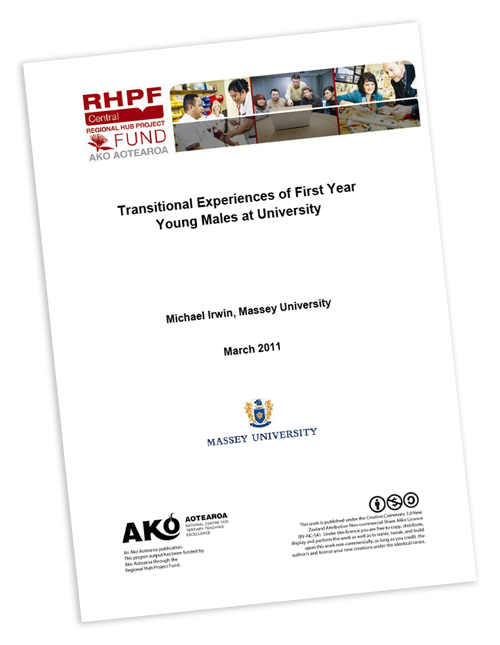
Transitional experiences of first-year young males at University

This report examines the differences between male and female experiences and perceptions of first year university study, and explores how transition to study can be made smoothly so that the academic learning experiences at university can be optimised by students from day one.

Download the report:

Background:

A project completed in 2011, undertaken by Massey University, to find possible explanations for gender differences occurring in enrolment and retention in New Zealand tertiary institutions.

Report prepared by Michael Irwin.


Co-funded by the Ako Aotearoa Regional Hub Project Fund (RHPF)

Posted in Student engagement | Leave a comment

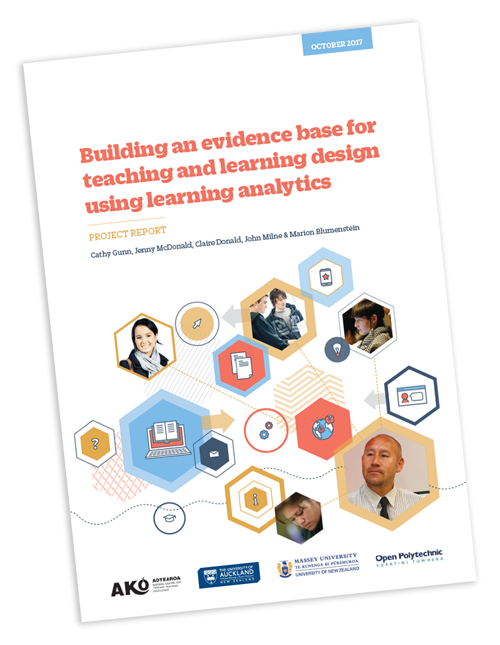
Building an evidence-base for teaching and learning design using learning analytics data

Does the data you extract from e-learning software tell you nothing? You’re not alone. Many teachers and lesson designers get stuck. This report gives teachers and designers a way to translate learning analytics data into effective e-learning design.

An accompanying guide details six case studies of early adopters of learning analytics practice in New Zealand tertiary institutions.

Resource download:

Background:

A two-year action-research project to identify how teachers and designers can use learning analytics data to more effectively design e-learning tasks. A collaboration involving The University of Auckland, Massey University and The Open Polytechnic of New Zealand.

Resources prepared by Cathy Gunn, Jenny McDonald, Claire Donald, John Milne and Marion Blumenstein.


Co-funded by the Ako Aotearoa National Project Fund (NPF)
Posted in Curriculum | Leave a comment

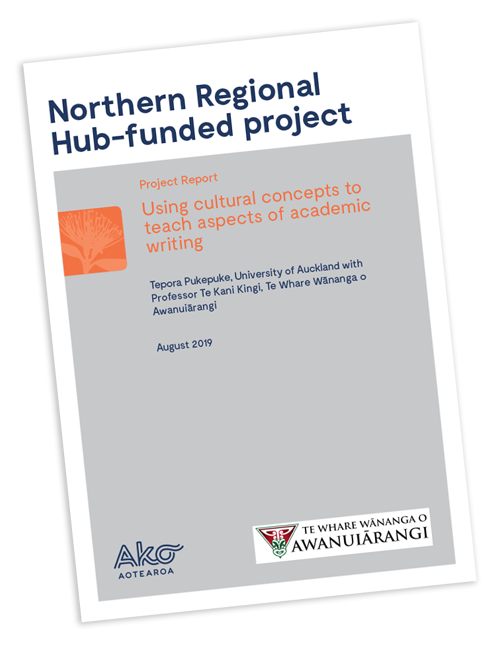
How can the concept of pōwhiri be used to teach essay writing skills?

This report details a study to examine how to support Māori learners by bringing together well-known concepts of Māori culture to teach essay writing skills.

Download the report:

Background:

A project, completed in 2018, to explore how the concept of “pōwhiri” can be used to help students to better prepare and construct essays and contribute to enhanced teaching and learning.

The familiar process of discussion within a hui (meeting) were used to connect the concept of pōwhiri (a ritualised ceremony of engagement) with the academic skill of writing, positioning Māori knowledge and experience as a central tenet.

A collaboration of University of Auckland and Te Whare Wānanga o Awanuiārangi.

Report prepared by Tepora Pukepuke and Professor Te Kani Kingi.


Co-funded by the Ako Aotearoa Regional Hub Project Fund (RHPF)

Posted in Māori learner success | Leave a comment

Using self-assessment to enhance learning

This report investigates how compulsory self-assessment in a course contributes to the learning of tertiary students who work in professional occupations.

Download the report:

Background:

A project, completed in 2012 at Victoria University of Wellington, which aimed to establish how students approached self-assessment tasks in relation to their future learning.

Report prepared by Roseanna Bourke and Carolyn Tait.


Co-funded by the Ako Aotearoa Regional Hub Project Fund (RHPF)

Posted in Assessment | Leave a comment

Using tutor hubs as a spotlight on quality and consistency

This report offers good practice suggestions for creating Tutor Hubs, where staff across the organisation meet to focus on a single area of training to improve quality and consistency.

Download the report:

Background:

Tutor Hubs bring together specialist tutors, Academic Managers, Resource Managers, and Moderators to focus on a single area of training. This cross-organisation approach to improving quality and consistency uses the experience and expertise of the different members, maximising the benefits of collaboration.

A project, completed in 2009 at Agribusiness Training Ltd, to develop a good practice guide describing Tutor Hubs.

Report prepared by Charlotte Heather.


Co-funded by the Ako Aotearoa Good Practice Publication Grants scheme (GPPG)

Posted in Curriculum | Leave a comment

Virtual construction project management environment

This report details the design and evaluation of a virtual Construction Project Management (CPM) environment to enhance the educational outcomes for learners in the discipline of Construction Management.

The concept could be transferable to a variety of courses in the construction discipline, including Architectural Technology, Construction Economics, Facilities Management etc. The accompanying course development guide offers suggestions for integrating a virtual environment into programmes.

Resource download:

Background:

A project, completed in 2016, to enhance educational outcomes for learners by creating a Virtual Construction Project Management Environment that utilises Virtual Design and Construction technologies and processes. A collaboration of Unitec Institute of Technology, University of Technology, Sydney, and Tampere University of Technology, Finland.

Resources prepared by Taija Puolitaival, Kathryn Davies, Linda Kestle, Perry Forsythe and Kalle Kahkonen.


Co-funded by the Ako Aotearoa Regional Hub Project Fund (RHPF)

Posted in Online learning | Leave a comment

Virtual field trips in tertiary science

This report documents the design and evaluation of a virtual field trip for Tertiary science students.

Download the report:

Background:

Field trips are one of the most critical pieces of learning for students in sciences like geology, biology, and geography. Virtual field trips (VFT) are being increasingly considered as effective forms of teaching, especially with the rise of new technologies and the growing demand for more inclusive classroom environments.

In this project, completed in 2018, the team developed a virtual field trip (VFT) and interactive expert question-and-answer sessions for tertiary students in an introductory-level geology course (Environmental Geohazards) at the University of Canterbury.

A collaborative project between University of Canterbury, Core Education, Frontiers Abroad and the Earthquake Commission.

Report prepared by Alison Jolley, Ben Kennedy, Nathaly Reyna, Tim Stahl, Samuel Hampton, Pete Sommerville, Thomas Wilson, Erik Brogt, Katherine Pedley, Jonathan Davidson, Mushtak Dawood, Paul Ashwell, Shelley Hersey, and Alistair Davies.


Co-funded by the Ako Aotearoa Regional Hub Project Fund (RHPF)

Posted in Online learning | Leave a comment

Visible Words: Second language vocabulary learning during reading

This report details an effective strategy for assisting English as a second language (ESL) students with vocabulary building as part of their academic study skill set.

Download the report:

Background:

A project completed in 2016, undertaken by Victoria University of Wellington, to investigate if word-writing is an effective mode for word learning, recognition, retrieval and understanding for students with English as a second language.

Report prepared by Irina Elgort.


Co-funded by the Ako Aotearoa Regional Hub Project Fund (RHPF)

Posted in Language, Literacy and Numeracy (LLN) | Leave a comment

Work-Integrated Learning

This report, and accompanying guides, focus on practical information about work integrated learning (WIL) programmes for students, lecturers, and employers.

Resource download:

Background:

A project completed in 2011, undertaken by Massey University, to develop a template for good practice in work integrated learning (WIL) programmes for tertiary training organisations and educators offering workplace learning opportunities to students.

Report prepared by Andy Martin, Malcolm Rees and Manvir Edwards.


Co-funded by the Ako Aotearoa Regional Hub Project Fund (RHPF)

Posted in Workplace learning | Leave a comment

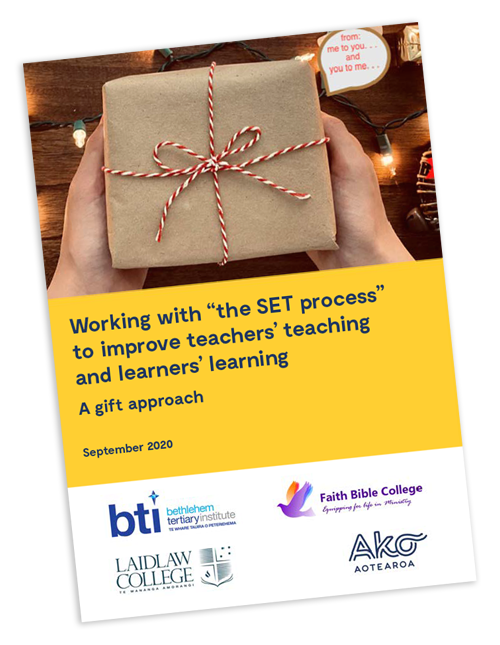
Working with “the SET process” to improve teachers’ teaching and learners’ learning

This report, and accompanying resources, introduces strategies and tips to enable tertiary educators to better access the ‘gifts of insight’ learners provide within Student Evaluation of Teaching (SET) data, with a model for approaching the SET process.

A two-page resource was produced for sharing with learners that outlines the role and purpose of the SET process and what it means for them.

Resource download:

Background:

This collaborative project, completed in 2021 at Bethlehem Tertiary Institute and Laidlaw College, aimed to develop and evaluate strategies to maximise the impact of Student Evaluation of Teaching (SET) data in teaching and learning.

Report prepared by Dr Bev Norsworthy and Dr Marion Sanders.


Co-funded by the Ako Aotearoa National Project Fund (NPF)
Posted in Curriculum | Leave a comment

Internships: More than enhancing graduate attributes and employability

Work Integrated Learning (WIL) has attracted attention as an instrument for enhancing professional practice and developing work-readiness in graduates. It is widely considered as a point of difference in developing graduate employability by enhancing skill outcomes through an authentic learning experience.

This report presents an analysis of students’ learning outcomes and overall experiences within a sport management and coaching WIL framework at Massey University. These reflections were examined under the various themes that emerged to provide recommendations that can be transferred and applied within other WIL contexts by any tertiary provider either offering, or considering WIL as an option for enhancing student learning.

An additional resources presents the collated students’ reflections that emerged as part of the data gathering process.

Resource download:

Background:

A one-year project, completed 2018 at Massey University, to examine and analyse students’ reflections based on their main activities, learning outcomes and overall experiences within a sport management and coaching Work Integrated Learning (WIL) framework at Massey University.

Research report prepared by Andy Martin and Malcom Rees. 


Co-funded by the Ako Aotearoa Regional Hub Project Fund (RHPF)

Posted in Workplace learning | Leave a comment

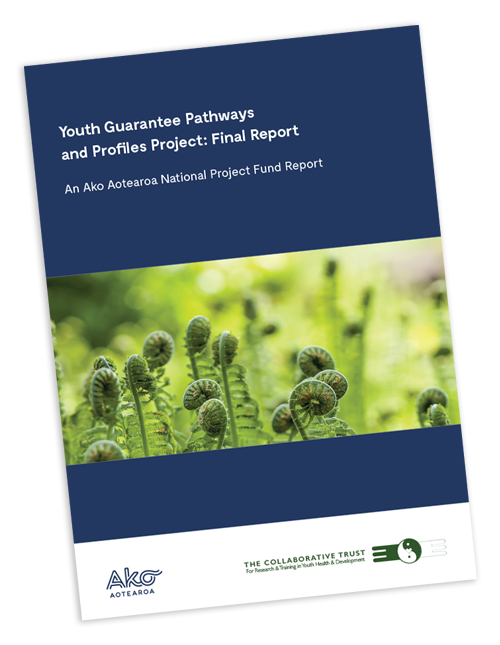
Youth guarantee pathways and profiles project

A four-year study that gathered the experiences and perspectives of young people in government-funded Youth Guarantee Fees Free training programmes and their education providers, and whether it contributes to sustainable outcomes.

As the project developed it became apparent that Youth Guarantee Fees Free is just one of the many experiences which influence young peoples’ transitions and pathways to and from education and employment. It had a significant positive impact on the lives of most participants during their engagement with the programme; however, its ongoing impact varies according to the wider context of each individual transition that a young person makes.

Resource download:

Supporting video:

The project team discuss the findings from the research.

Background:

A four-year project, completed in 2020 at Community College New Zealand, that explored the experiences of young people on Youth Guarantee Fees-Free training programmes and their education providers.

Final report prepared by Adelaide Reid and Ria Schroder.


Co-funded by the Ako Aotearoa National Project Fund (NPF)
Posted in Student engagement | Leave a comment

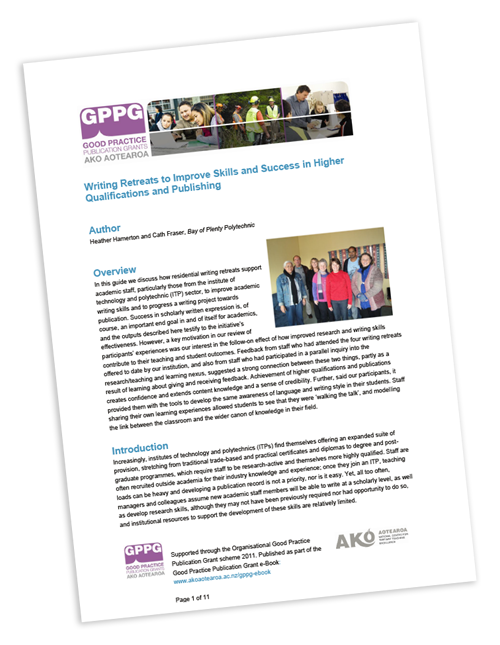
Writing retreats to improve skills and success in higher qualifications and publishing

This report discusses how residential writing retreats support academic staff, particularly those from the institute of technology and polytechnic (ITP) sector, to improve academic writing skills and to progress a writing project towards publication.

Download the report:

Background:

A project completed in 2012, undertaken by Bay of Plenty Polytechnic, that aimed to foster tertiary teaching staff’s motivation, confidence and skill set to write at an academic level through an off-campus, residential writers’ retreat.

Report prepared by Heather Hamerton and Cath Fraser.


Co-funded by the Ako Aotearoa Good Practice Publication Grants scheme (GPPG)

Posted in Professional learning | Leave a comment

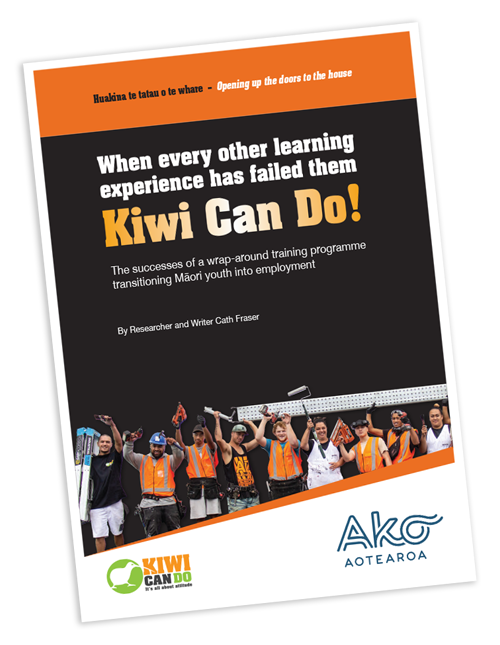
The successes of a wrap-around training programme transitioning Māori youth into employment

This report, and accompanying quick-reference poster, introduce ten interwoven strategies that contribute to the success of a “wrap-around training package” for Māori youth.

Resource download:

Background:

A project completed in 2018, undertaken by Kiwi Can Do, to identify the strategies of their vocational training and work experience programmes which are contributing to their success in moving young Māori from unemployment into the workplace and helping them to stay in employment.

Resource and report prepared by Cath Fraser.


Co-funded by the Ako Aotearoa National Project Fund (NPF)
Posted in Māori learner success | Leave a comment

Workplace-Based Learning: Introducing a new applied degree paradigm

This report identifies guiding principles for organisations wishing to implement a workplace-based learning degree programme.

Download the report:

Background:

A project completed in 2012, undertaken by Otago Polytechnic, to investigate and evaluate the impact on workplace-based learners, facilitators, employers and institutional practices of a pilot for a workplace-based degree pathway.

Report prepared by Keith Tyler-Smith.


Co-funded by the Ako Aotearoa Regional Hub Project Fund (RHPF)

Posted in Workplace learning | Leave a comment

Work Active: Supporting the “forgotten learners” in their journey to work

This report details the creation and evaluation of the Work Active project, a new approach to teaching and learning for adult learners with an intellectual disability.

Download the report:

Background:

A 15-month project, completed in 2019 by SkillWise, to increase employment outcomes for adults with intellectual disability through the development of a teaching and learning framework based on a collaborative approach that maximises the potential for sustainable employment for adults with intellectual disability.

Report prepared by John Grant, Dr Maria Perez-y-Prez and Tracey-Anne Cook.


Co-funded by the Ako Aotearoa Regional Hub Project Fund (RHPF)

Posted in Accessibility | Leave a comment

Why lecturers use exemplars and how they use them

Educators’ use of exemplars as a teaching-learning tool has been shown to play a key role in developing students’ ability to make informed evaluative judgments about their own work and the work of peers.

This report documents a survey of lecturers’ understandings about and use of exemplars and how they use them. Findings from the survey were used to produce a set of guidelines to support lecturers who wish to embark on or continue to develop their use of exemplars in teaching-learning programmes.

Download the report:

Background:

A two-year project completed in 2018, undertaken by The University of Auckland, to explore lecturers’ understandings about and use of exemplars and to canvas why lecturers in the Faculty of Education and Social Work at the University of Auckland use exemplars and how they use them.

Report prepared by Eleanor Hawe, Helen Dixon and Richard Hamilton.


Co-funded by the Ako Aotearoa Regional Hub Project Fund (RHPF)

Posted in Curriculum | Leave a comment

Where have all the young men gone?

This report documents an investigation to examine male views on tertiary study, and identify their barriers to study.

The report suggests actions that may help increase both the number and proportion of males to study Business Programmes.

Download the report:

Background:

A project completed in 2009, undertaken by Waiariki Institute of Technology, to investigate the reasons why there is a relatively low proportion of males, compared with females, enrolled in Business programmes within the School of Business and Tourism (BTO) at Waiariki Institute of Technology.

Report prepared by Cecile Hoods, Mark Pearce and Ananda Wickramasinghe.


Co-funded by the Ako Aotearoa Regional Hub Project Fund (RHPF)

Posted in Student engagement | Leave a comment

Where do they go? The post-classroom journeys of our youth guarantee graduates

This report, and open letter to Youth Guarantee providers, identifies useful strategies that lead to longer-term benefits for Youth Guarantee students.

Resource download:

Background:

A research project, completed in 2014, to investigate student achievement, during and after attending the Hair to Train programme. The intention was to determine measurable outcomes and develop a set of principles to ensure optimal results for future students involved in the Hair to Train programme and other Youth Guarantee programme providers.

A collaboration involving three Private Training Organisations: Hair to Train (project lead), based in Tauranga, Pacific Coast Technical Institute, also based in Tauranga, and Corporate Academy Group, based in Auckland.


Co-funded by the Ako Aotearoa Regional Hub Project Fund (RHPF)

Posted in Trades training | Leave a comment

A vocational training model that supports learners in New Zealand workplaces

This report, and accompanying handbook, detail how to successfully implement the OLA Vocational Training Model in New Zealand workplace training contexts.

Resource download:

Background:

A 2-year project, completed in 2019, to collate and share information on the adaptation of a proven integrated vocational training model as part of Floristry training at Manukau Institute of Technology (MIT).

A collaboration of QED Associates, Manukau Institute of Technology and Alkimi Consulting.

Report prepared by Christina Newland, Peter Watson and Graeme McClennan.


Co-funded by the Ako Aotearoa Regional Hub Project Fund (RHPF)

Posted in Workplace learning | Leave a comment

Waiariki agricultural collaboration

This report documents the collaboration creation, and evaluation of a qualification – Te Taumata Raukura – that aims to offer ākonga-centred, hands-on learning with both general and specific career knowledge.

The qualification was localised for the Waiariki region and features context-rich delivery model that utilises the collective strengths of the collaborative partners, in this case, the Ngāti Pikiao collective, Te Wānanga o Aotearoa and Taratahi Agricultural Training Centre.

The findings may be of use to other organisations looking to create a collaborative, localised programme or qualification.

Download the report:

Background:

A project, completed in 2015, to enhance the participation and success of Māori learners in agricultural training programmes.

A collaboration of Te Wānanga o Aotearoa, Taratahi Agricultural Training Centre and Ngāti Pikiao collective, a collective of three Māori land trusts – Tautara Matawhaura, Pukahukiwi and Waerenga.

Report prepared by Neville King, Rangimarie Hunia and Leah Fitzpatrick.


Co-funded by the Ako Aotearoa National Project Fund (NPF)
Posted in Māori learner success | Leave a comment

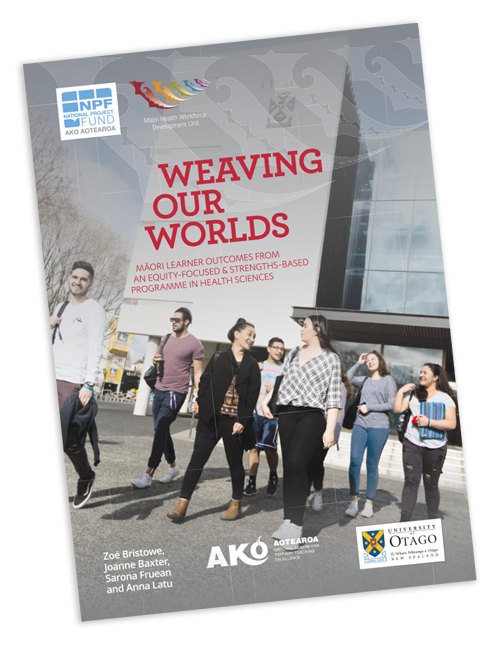
Weaving our worlds: Māori learner outcomes in health science

This report documents the implementation and evaluation of the Te Whakapuāwai programme at the University of Otago in 2014 and 2015.

The programme aimed to identify the impact of a strengths-plus-evidence-informed intervention on academic outcomes and student experience for Māori Health Sciences First Year (HSFY) students.

Download the report:

Background:

A project, completed in 2016, to implement and evaluate a programme set up to support the academic achievement of students enrolled in Māori Health Sciences First Year (HSFY) studies at the University of Otago.

In particular, the focus was on investigating impacts on students from lower socio-economic backgrounds, lower decile schools and those with educational gaps in science subject attainment.

Report prepared by Zoë Bristowe, Joanne Baxter, Sarona Fruean and Anna Latu.


Co-funded by the Ako Aotearoa National Project Fund (NPF)
Posted in Māori learner success | Leave a comment

Ka Whānau Mai Te Reo: I Roto i Te Wānanga

These reports present a case study on the practices and processes at Te Wānanga o Raukawa, exploring the support offered to reo Māori learners and speakers as they transition into and out of tertiary institutions.

They include a set of recommendations for tertiary education organisations (TEOs) to assist them to consider how they contribute to whānau reo Māori aspirations, alongside tools for whānau to assist in decision making about tertiary study in relation to their aspirations for te reo Māori.

Resource download:

Background:

A four-year project, completed in 2017, to explore whānau experiences of reo Māori education in tertiary settings, with a specific focus on Te Wānanga o Raukawa and the research question: How well prepared is the tertiary sector to support whānau Māori language aspirations?

A collaboration between Te Wānanga o Raukawa, Te Wāhanga New Zealand Council of Educational Research (NZCER).

Reports prepared by Debbie Broughton, Jessica Hutchings, and Nicola Bright.


Co-funded by the Ako Aotearoa National Project Fund (NPF)
Posted in Māori learner success | Leave a comment