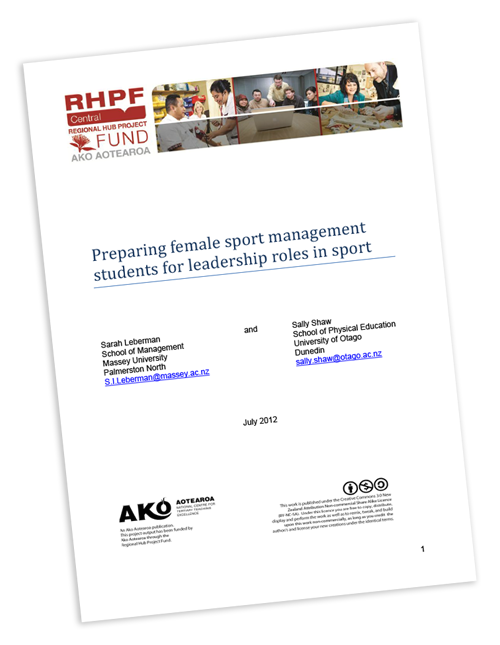
Preparing female sport management students for leadership roles in sport

This report examine the experiences of recent female sport management graduates and female CEOs of New Zealand sport organisations. It provides a number of key recommendations for tertiary organisations with sport management courses, in particular, but also more generally business courses.

Download the report:
Background:

A project, completed in 2012, to examine the university learning experience, career expectations and experiences of recent female sport management graduates and female CEOs of New Zealand sport organisations. A collaboration of Massey University and University of Otago.

Research report prepared by Sarah Lieberman and Sally Shaw.


Co-funded by the Ako Aotearoa Regional Hub Project Fund (RHPF)
Posted in Curriculum | Leave a comment

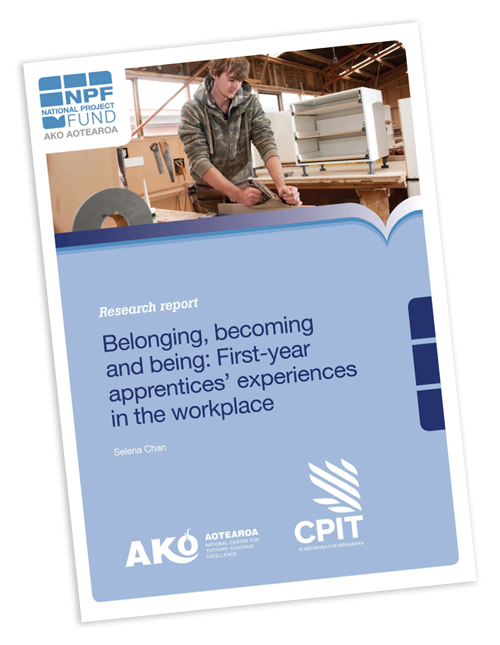
First-year apprentices’ experiences in the workplace

In this report, the perspectives of first-year apprentices (both continuing and discontinued) and pre-trade student are studied to explain the factors influencing young peoples’ decision to commence and continue with apprenticeship.

The report offers recommendations for workplaces, trade workers, training providers and ITOs to ensure apprentices can establish a sense of belonging in the workplace, and support them to complete their apprenticeship.

A supporting resource was also created specifically for learners thinking about becoming an apprentice to learn a trade.

Download the report:

Background:

A research project completed in 2011 that explored the workplace experiences of first-year apprentices. A collaboration of Christchurch Polytechnic of Technology, Competenz and the Agriculture, Boating, Hairdressing, Building and Construction, Hospitality Standards and Joinery Industry Training Organisations (ITOs).

Report and resource prepared by Selena Chan.


Co-funded by the Ako Aotearoa National Project Fund (NPF)

Posted in Workplace learning | Leave a comment

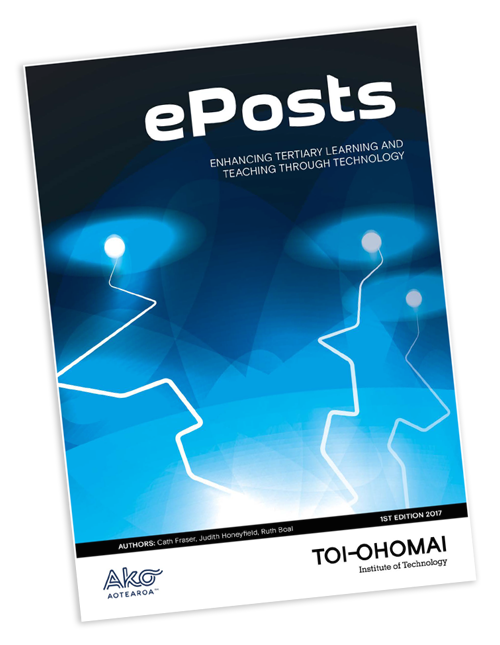
ePosts: An introduction to effective online teaching

A resource created to assist new tertiary teachers and teachers new to eLearning.

It features 10 one-page ‘primers’, introducing current ideas about learning technology adoption, written in simple, accessible language.

Note: While ePosts offers a summary of some of the most recent and influential ideas about learning technology adoption at the time of its creation, we live in a world characterised by rapid advances in concepts, skills and technology. Readers are encouraged to maintain currency with developments by engaging with communities of practice, conferences, training opportunities and educational journals – both online and in person.

Resource download:

Background:

An eLearning project, completed in 2017, to produce an entry-level handbook, workshop and workshop materials. A collaboration of Toi Ohomai Institute of Technology, Weltec & Whitireia and Ara Institute of Technology.

Resource produced by Judith Honeyfield, Cath Fraser and Ruth Boal for Toi Ohomai Institute of Technology.


Co-funded by the Ako Aotearoa Regional Hub Project Fund (RHPF)
Posted in Online learning | Leave a comment

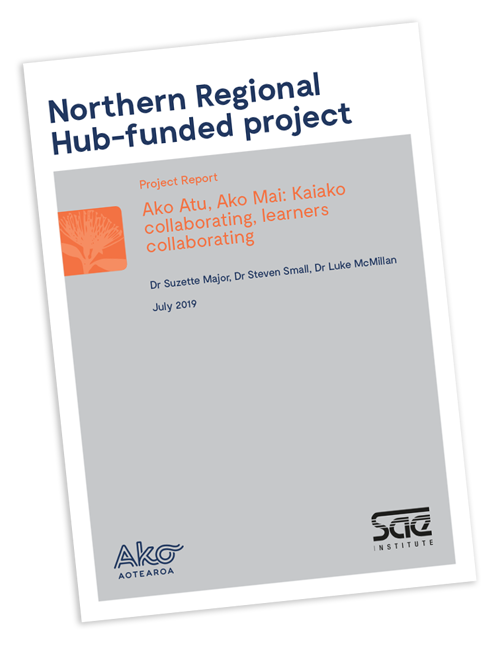
Ako atu, Ako mai | Kaiako collaborating, Learners collaborating

This report documents the changes in practice for teachers (Kaiako) who participated in a Professional Learning Community (PLC) to learn co-teaching skills, course and programme design methods, teaching methods in the creative practice context, and, importantly, how to work as a collaborative team.

It contains recommendations for those looking to establish a Professional Learning Community in their own organisation.

Download the report:

Background:

A project, completed by the SAE Creative Media Institute in 2019, to investigate whether working collaboratively enables Kaiako/teachers to examine their teaching and translate their research knowledge, skills and outcomes into their teaching practice to influence successful student learning.

Report prepared by Dr Suzette Major, Dr Steven Small, Dr Luke McMillan.


Co-funded by the Ako Aotearoa Regional Hub Project Fund (RHPF)
Posted in Professional learning | Leave a comment

Ako Ao Mariko: VR for learning te Reo

This project has developed an application, Māori Mai ME, which can be accessed from a smartphone using low-cost virtual reality (VR) headsets to present basic Māori language phrases in a range of contexts.

Māori Mai ME is the world’s first developmental virtual reality app for learning te reo Māori. The ‘Māori Mai ME’ app focuses on the effectiveness of virtual reality as a language learning tool to reduce a user’s feelings of whakamā (anxiety) while learning te reo Māori.

Māori Mai ME

https://digitaledu.ac.nz/maori-mai-me/

Background:

This project, completed in 2020, aimed to design and implement VR activities with appropriate scaffolding in place to help second language learners achieve the learning outcomes in a safe environment.


Co-funded by the Ako Aotearoa Regional Hub Project Fund (RHPF)
Posted in Online learning | Leave a comment

A foundation for progression

Graduate profiles for level 1 and 2 qualifications

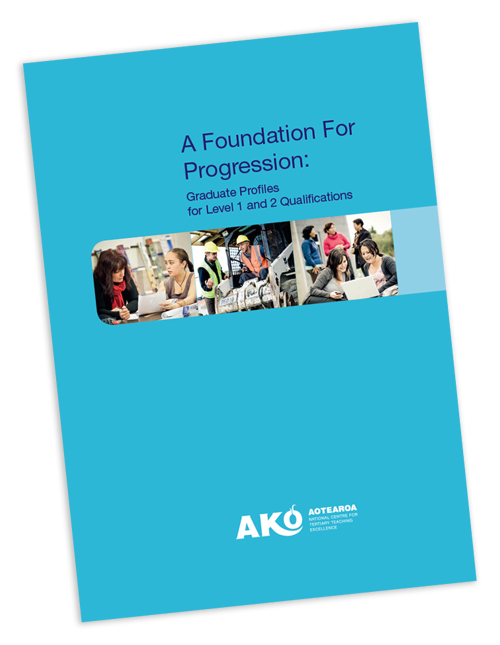
This report introduces four generic graduate profiles that could be used as references for Level 1 and 2 qualifications to ensure that educational stakeholders have a common understanding of what graduates from these levels should know, do, and be.

The report also encourages people to use them as a guide to how such capabilities can be expressed in a qualification, while maintaining the flexibility of providers to design and deliver programmes that respond to the specific learner needs.

Having these profiles available will make it easier for learners, tertiary organisations, qualification and programme developers, and government agencies to all be ‘on the same page’ when discussing the purpose and nature of qualifications at these levels.

Download the report:

Background:

A project, completed in 2014, to develop graduate profiles for qualifications at Levels 1 and 2 of the New Zealand Qualifications Framework (NZQF).

A collaboration of Ako Aotearoa, Marlborough Community College, Te Wānanga o Aotearoa, Bay of Plenty Polytechnic, CareerForce, He Toa Sports and Adult Literacy Practitioners Association.


Posted in Strategic leadership and change | Leave a comment

Advancing a digital strategy for learning and teaching te reo Māori

This report details the outcomes from a number of initiatives developed at Te Ara Poutama, the Faculty of Māori Development at AUT University, to enhance the teaching and learning of te reo Māori.

These include a blended platform for the teaching and assessment of te reo Māori.

Download the report:

Background:

Report prepared by Pare Keiha, John Moorfield, Tania Ka‘ai & Hohepa Spooner.


Funded by the Ako Aotearoa Good Practice Publication Grants scheme (GPPG)

Posted in Online learning | Leave a comment

Adult refugee learners with limited literacy: Needs and effective responses

This report identifies learning needs of refugees with low language and literacy skills and shares teaching strategies to support them. 

Download the report:

Background:

A project completed in 2012, to document and analyse the learning needs and issues of adult refugees with low language and literacy skills by looking at how their prior experiences and current contexts affect their educational participation and learning.

Report prepared by John Benseman.


Co-funded by the Ako Aotearoa Regional Hub Project Fund (RHPF)
Posted in Language, Literacy and Numeracy (LLN) | Leave a comment

Addressing common student problems with assessment – Support staff perspectives

This report identifies common problems that students transitioning from secondary school into large first-year university classes encounter with regards to assessment and the likely causes of those problems.

It offers recommendations for learners (and their families), lecturers, support staff and institutions to consider.

Download the report:

Background:

A project, completed in 2015, to identify common problems that students transitioning from secondary school into large first-year university classes encounter with regards to assessment and the likely causes of those problems.

Report prepared by Valerie Sotardi and Erik Brogt.


Co-funded by the Ako Aotearoa Regional Hub Project Fund (RHPF)
Posted in Educational transitions | Leave a comment

Practice makes perfect – does it?

Adding value to practicum experience through field-based teacher education

This report documents an investigation on the value added by field-based teacher education (FBTE) within the MIT early childhood community of practice compared with classroom-based programmes. It identifies examples of good teacher education practice.

Download the report:

Background:

This project aimed to explore the value added by field-based teacher education in the early childhood education sector.

Report prepared by Lin Howie and Bill Hagan.


Co-funded by the Ako Aotearoa Regional Hub Project Fund (RHPF)
Posted in Industry specific resources | Leave a comment

A data-story library for New Zealand first-year business students

This report details the assembly and use of a series of data sets and associated ‘stories’ related to New Zealand business activity for use in a first-year business statistics paper.

The findings showed the introduction of datasets related to New Zealand Business activity has been associated with a positive effect on the learning experience of students.

Download the report:

Background:

A project, completed in 2012, to collect datasets related to New Zealand business activity for use in teaching introductory statistics and quantitative methods to undergraduate business students, and to place them in an online data-story library for open access. A collaboration of Massey University and University of Auckland.

Report prepared by Howard Edwards, John Xie, Christine Miller and Ross Parsonage.


Co-funded by the Ako Aotearoa Regional Hub Project Fund (RHPF)
Posted in Curriculum | Leave a comment

A collaborative approach to mentoring

A model for Industry Training Organisations and employers

This report details how Downer New Zealand and two ITOs used mentoring to improve learning outcomes and save company dollars. 

The project also produced practical support resources to support mentoring in the workplace, or industry training.

Resource download:

Report | A Collaborative Approach to Mentoring (PDF, 1Mb)

How-to guide | A Collaborative Approach to Mentoring (PDF, 1Mb)

This guide aimed to address many of the questions mentors may have around understanding what’s involved, what the mentoring role is (and isn’t) as well as providing mentors with some tools and places to go to get more support

Mentor’s Workbook | A Collaborative Approach to Mentoring (PDF, 1Mb)

A downloadable workbook for planning and recording mentoring sessions

Mentor’s Question Wheel (PDF, 2Mb)

A printable Mentor’s question wheel resource that can be used by mentors to challenge mentees to question themselves.

A collaborative approach to mentoring report cover

Supporting video:

A 10-minute video exploring Downer New Zealand’s experience of mentoring apprentices by Ako Aotearoa.

Background:

A project, completed in 2016, that trialled employer-led, collaborative mentoring for nearly 100 Downer New Zealand apprentices in the workplace. A collaboration between Downer New Zealand (as the the employer) and Connexis and the Primary ITO (as the two Industry Training Organisations).

Report produced by Sandra Johnson.


Co-funded by the Ako Aotearoa National Project Fund (NPF)

Posted in Industry specific resources | Leave a comment

Adult and community education learners

Evaluation and review to support sustained learner success

This report documents the findings of a study that investigated how successful learning is defined by learners in the Adult Community Education (ACE) sector, and discusses how this definition can inform the programme design, interventions and activities offered the ACE sector.

Download the report:

Background:

A project completed in 2017 to investigate successful learning in the Adult Community Education (ACE) sector. A collaboration of three Rural Education Activities Programme (REAP) centres in the Wairarapa, Central Otago and the Eastern Bay of Plenty.

Report prepared by Peter McNeur, Tracey Shepherd, Bernie Lepper, John Chemis, Ryan Morrison and Lesley Petersen. 


Co-funded by the Ako Aotearoa Regional Hub Project Fund (RHPF)
Posted in Adult and community education | Leave a comment

2016 scenario guide to effective tertiary education in New Zealand

These resources were developed in 2012 to provide a system-wide view of what tertiary education might look like in New Zealand in 2016, describing a series of four possible scenarios for the tertiary education sector in the future.

The scenarios have been developed to support tertiary education managers and leaders to plan for future organisational and programme development.

To get the most benefit from this guide, senior managers are encouraged to choose a scenario quadrant from the poster and work through the related activities in the planning resource.

While it is now beyond 2016, the resources may still be of use for those wanting practice planning for change.

Resource download:

Background:

A project completed in 2012 to develop information that would give tertiary sector management a system-wide view of tertiary education in New Zealand in 2016 and allow them to plan for the future. A collaboration of the University of Canterbury, University of Otago, Massey University and Distance Education Association of New Zealand.

Resources prepared by Niki Davis, Andrew Higgins and Pinelopi Zaka. 


Co-funded by the Ako Aotearoa National Project Fund (NPF)

Posted in Strategic leadership and change | Leave a comment

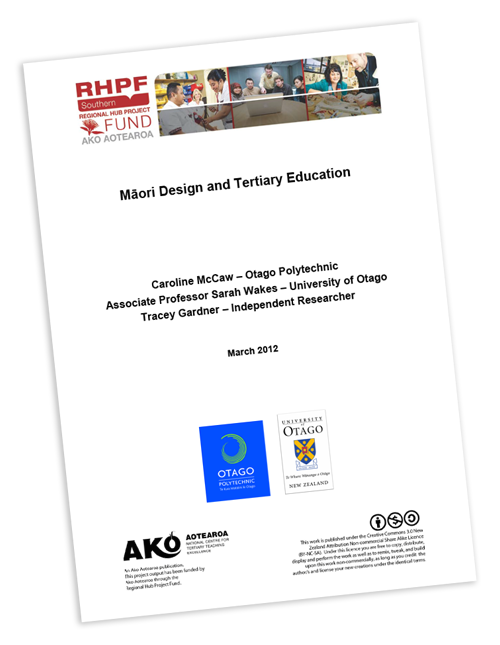
Māori design and Tertiary Education

This report identifies and collates specific methods, practices and strategies for use in tertiary Māori design teaching.

These research findings and tested strategies will benefit students of design in Aotearoa/New Zealand through teaching and help to develop cultural considerations for New Zealand designers.

Download the report:

Background:

A project, completed in 2012 by Otago Polytechnic and University of Otago, to identify and collate specific methods, practices and strategies for use in tertiary design teaching and disseminate important ideas relating to te Ao Māori and Māori design principles, practices and processes to tertiary design educators.

Research report prepared by Caroline McCaw, Sarah Wakes and Tracey Gardner.


Co-funded by the Ako Aotearoa Regional Hub Project Fund (RHPF)
Posted in Māori learner success | Leave a comment

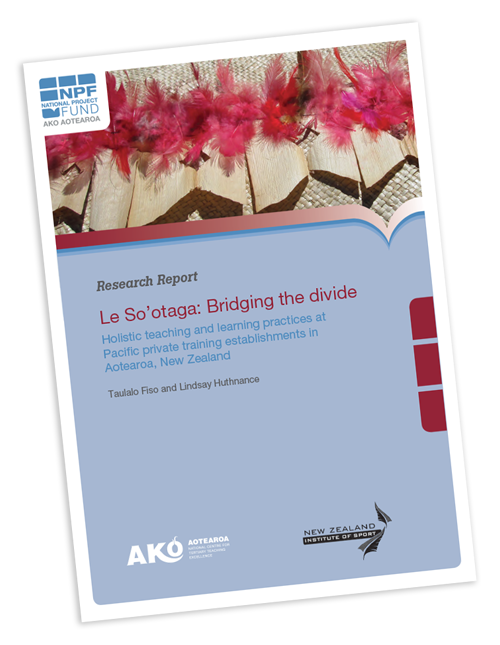
Holistic teaching and learning practices of Pacific PTEs

Le So’otaga: Bridging the divide

This report identifies the holistic strategies of teaching and learning in PTEs, which are the most effective for Pacific learners and the key characteristics of successful Pacific PTEs and tutors.

It uses le so’otaga, which represents a bridge between spaces, as an appropriate metaphor for describing how PTEs support learners by acting as a bridge between different spaces to achieve positive outcomes for all.

Download the report:

Background:

A project completed in 2012 to understand how holistic practices at Pacific Private Training Establishments (PTEs) benefit Pacific learners and support academic achievement. A collaboration of New Zealand Institute of Sport, Pacific Islands Tertiary Education Providers of New Zealand, New Zealand Career College, and The Pacific Peoples Learning Institute.

Report produced by Taulalo Fiso and Lindsay Huthnance.


Co-funded by the Ako Aotearoa National Project Fund (NPF)

Posted in Pacific learner success | Leave a comment

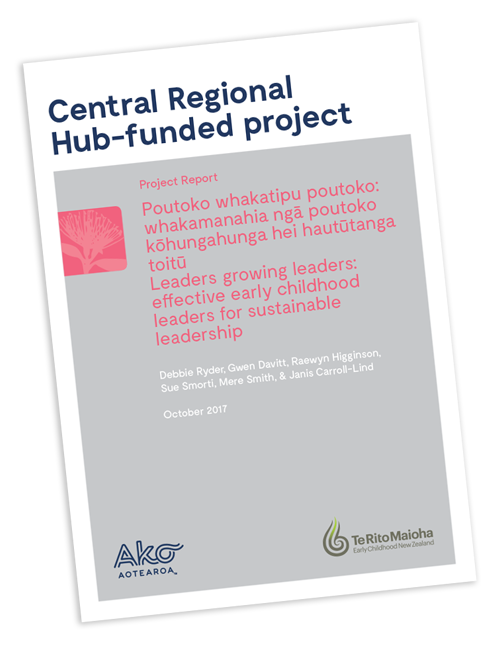
Leaders growing leaders

Effective early childhood leaders for sustainable leadership

This report documents how effective early childhood leaders support the ‘on-the-job’ leadership development of themselves and their teaching teams.

The study generated a framework to support the professional learning and development in leadership, for leaders and their teams, to ensure that effective leadership is purposefully grown, developed and sustained across their ECE settings.

While the study is based in an Early Childhood Education setting, the findings may be of use for those wishing to build leadership capability in their own organisations.

Download the report:

Background:

An eighteen-month project, completed by Te Rito Maioha Early Childhood New Zealand in 2016, to demonstrate how effective early childhood education (ECE) leaders support the leadership development of themselves and their teaching teams to sustain leadership capacity development in their ECE settings.

Report prepared by Debbie Ryder, Gwen Davitt, Raewyn Higginson, Sue Smorti, Mere Smith and Janis Carroll-Lind. 


Co-funded by the Ako Aotearoa Regional Hub Project Fund (RHPF)
Posted in Coaching & mentoring | Leave a comment

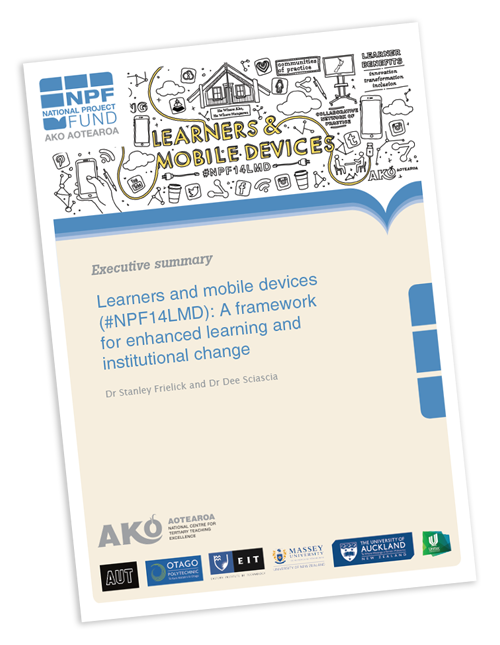
Learners and mobile devices

A framework for enhanced learning and institutional change

This report identifies a range of practical strategies for students, teachers and leaders to use mobile devices for pedagogical transformation and empowering learners.

These strategies are aimed towards practitioners and institutions within the tertiary sector but are also applicable to any teachers interested in pedagogical transformation through m-learning.

Download the report:

Background:

A project completed in 2015 to explore the use of mobile devices in the teaching and learning process. A collaboration involving six New Zealand tertiary institutions, led by the Auckland University of Technology (AUT).

The report was produced by Dr Stanley Frielick and Dr Dee Sciascia.


Co-funded by the Ako Aotearoa National Project Fund (NPF)

Posted in Using technology in education | Leave a comment

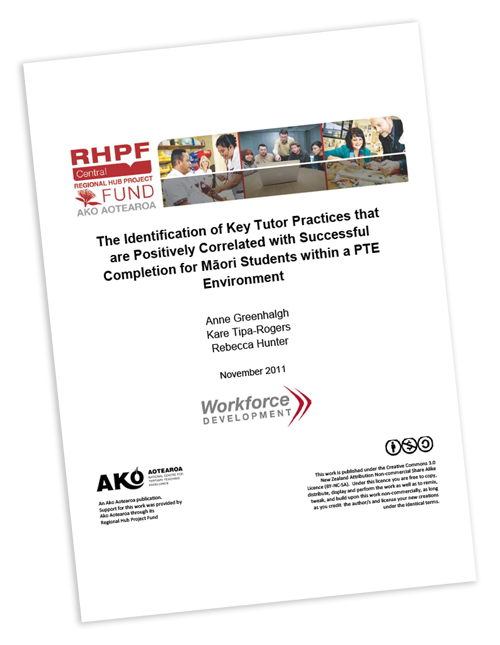
Key tutor practices that are positively associated with successful completion for Māori PTE students

This report identifies key tutor practices that lead to successful completion for Māori students within a PTE Environment.

The findings may be of use for planning professional development delivery for tutors who are working within the Private Training Establishment (PTE) sector.

Download the report:

Background:

A project, completed in 2011, to identify key tutor practices, in relation to delivery of content, student engagement, and cultural awareness, that correlated to successful outcomes for Māori students in a PTE.

Report completed for Ako Aotearoa, Workforce Development and Eastern Institute of Technology by Anne Greenhalgh, Kare Tipa-Rogers and Rebecca Hunter.


Co-funded by the Ako Aotearoa Regional Hub Project Fund (RHPF)
Posted in Māori learner success | Leave a comment

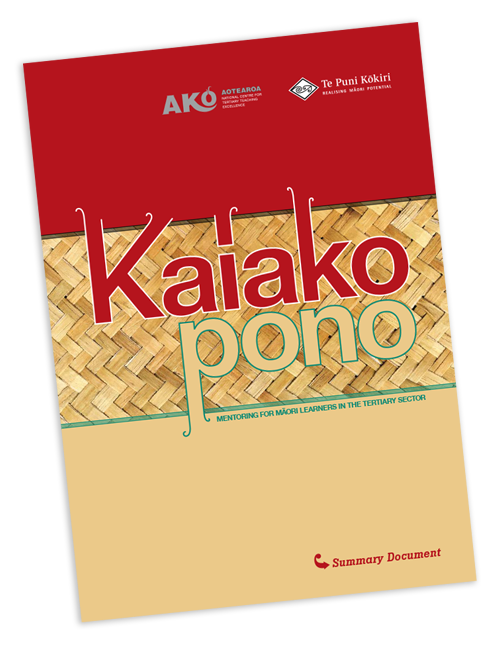
Kaiako Pono

Mentoring for Māori learners in the tertiary sector

This report shows the significant positive impact mentoring has on the learning of Māori students in the tertiary sector.

It profiles mentoring models for Māori in the tertiary sector; highlights and documents good mentoring practice for Māori; and investigates how institutions are defining and measuring success in relation to mentoring Māori learners.

It may be of use for organisations seeking to implement a formal mentoring programme for their leaners.

Download the report:

Background:

A project completed in 2010 to review mentoring of Māori learners in the tertiary education sector.

Report completed for Ako Aotearoa, Te Puni Kōkiri and the Tertiary Education Commission by Pania Tahau-Hodges.


Posted in Māori learner success | Leave a comment

ITO workplace assessment structures

The guide resource is based on the best available evidence from a research project involving an analysis of New Zealand and international literature, a survey of ITOs, and focus groups with ITO assessors and ITO staff.

The primary intended audience for the guide is quality assurance and assessment staff at Industry Training Organisations (ITO). However, employers and workplace-based assessors, training advisors or managers, as well as roving (ITO-contracted) assessors, may also find it useful.

Resource download:

Background:

A project completed in 2010 to examine the structures and processes Industry Training Organisations (ITOs) use to support and manage workplace assessment and assessors. 

Reports prepared for Ako Aotearoa and the Industry Training Federation Research Network by Karen Vaughan and Marie Cameron, New Zealand Council of Educational Research.


Co-funded by the Ako Aotearoa National Project Fund (NPF)

Posted in Workplace learning | Leave a comment

How to make learning interventions which support dyslexic trainees in classroom and workplaces

This report documents an investigation into how primary industry trainees with dyslexia can be supported in classroom and workplace environments.

At the end of the report is a guide for trainees, tutors, training advisers and employers outlining strategies to improve learning outcomes for trainees with dyslexia.

Download the report:

Background:

A project, completed in 2016, to investigate how Primary Industry Training Organisation trainees with dyslexia can be supported in classroom and workplace environments. A collaboration between the Primary Industry Training Organisation and Petersen Consulting.

The report was prepared by Marianne Farrell, Mike Styles, and Lesley Petersen.


Co-funded by the Ako Aotearoa Regional Hub Project Fund (RHPF)
Posted in Neurodiversity | Leave a comment

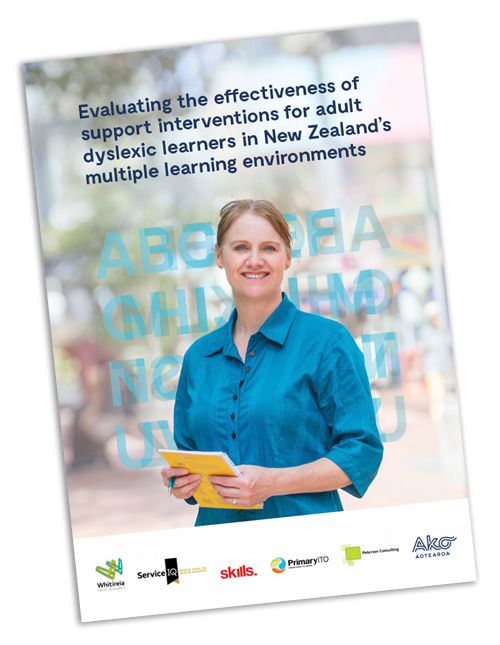
Evaluating the effectiveness of support interventions for dyslexic learners in multiple learning environments

This report evaluates a range of interventions designed to benefit dyslexic learners, and support those who work with them – from a user’s perspective.

The findings have been collated into a series of guides that will be of use to those supporting dyslexic learners.

One of the most notable findings was that the learners had very clear ideas about strategies which helped them learn, and the things teachers and employers did which helped, and those which did not. They often understood their condition better than many of those around them, and often already had ideas about how they could further support themselves.

Teachers and employers also had useful observations and strategies to offer, and a strong sense of the personal attributes needed to bring out the best in learners and employees with dyslexia.

Download the report:

Background:

A project completed in 2018 to evaluate and report on interventions that work best for adult learners with dyslexia.

A collaboration of the Primary ITO, The Skills Organisation, Capital Training, ServiceIQ, Whitireia New Zealand and Petersen Consulting.

The project built on past research carried out between 2014 and 2015, which investigated the learning experiences and needs of adult dyslexic trainees in the Primary ITO.


Co-funded by the Ako Aotearoa National Project Fund (NPF)

Posted in Neurodiversity | Leave a comment

Culturally relevant peer support for Māori and Pasifika student engagement, retention and success

This report documents the establishment of a peer support programme to provide culturally relevant support for Māori and Pasifika learners studying at a distance to enhance their learning and success.

Download the report:

Background:

A project completed in 2008 to trial a programme of culturally relevant peer support with first-year Māori and Pasifika students studying in degree and diploma programmes at the Open Polytechnic.

Report prepared by Catherine Ross.


Co-funded by the Ako Aotearoa Regional Hub Project Fund (RHPF)
Posted in Māori learner success, Pacific learner success | Leave a comment

Building academic numeracy

This report documents the effectiveness of interventions to address low student numeracy through the provision of a numeracy development programme, relevant to the students’ discipline context.

It found early intervention, and active participation in a learning intervention, assisted the transition of first year students into university by improving their conceptual knowledge of mathematics and contributing to their academic success.

Download the report:

Background:

An 18-month University of Otago project to evaluate a numeracy programme aimed at students entering university with low mathematics competency.

Report prepared by Brigid Casey and Andrea Knowles.


Co-funded by the Ako Aotearoa Regional Hub Project Fund (RHPF)
Posted in Language, Literacy and Numeracy (LLN) | Leave a comment

Help or hindrance

Blended approaches and student engagement

Blended learning environments should allow students to select their own preferred blend of learning components to foster diverse ways of learning.

This report shares effective strategies teachers can use within a blended learning environment to enhance learner engagement and achievement.

The strategies can be applied both online and in the classroom to help improve teaching quality.

Download the report:

Background:

A project to identify effective strategies teachers can use within a blended learning environment to enhance learner engagement and achievement. A collaboration of four universities, Massey University, Auckland University of Technology, Canterbury University and Te Whare Wānanga o Awanuiārangi.

Reports prepared by Lynn M. Jeffrey, John Milne, Gordon Suddaby and Andrew Higgins.


Co-funded by the Ako Aotearoa National Project Fund (NPF)

Posted in Student engagement | Leave a comment

A beginner’s guide to plagiarism

A practical, 32-page guide book on the topic of plagiarism for students and academic writers.

Resource download:

Background:

The booklet was written and illustrated by Dr Deb Hill, a political philosopher of education and Whanganui Learning Centre tutor and published in 2015.


Co-funded by the Ako Aotearoa Regional Hub Project Fund (RHPF)
Posted in Assessment | Leave a comment

Change strategies to enhance Pasifika student success at three Canterbury tertiary institutions

This report explores Pasifika learner voices to identify and build on strategies that support these learners to success within three tertiary institutions in Canterbury.

It aimed to answer two main questions: how do we know that what we are doing to support Pasifika student success is working? And what does success mean to Pasifika students?

The understanding of effective strategies to support Pasifika students at tertiary institutions is critical if educational institutions wish to address continuing education inequities in New Zealand.

Download the report:

Background:

A research project completed in 2015 to identify and understand more fully the change strategies required to enhance effective engagement and support for Pasifika students within three tertiary institutions in Canterbury – Lincoln University, Christchurch Polytechnic Institute of Technology and the University of Canterbury.

Report prepared by Pauline Luafutu-Simpson, Elena Moltchanova, Danielle O’Halloran, Lorraine Petelo, John Schischka and Sam Uta’i.


Co-funded by the Ako Aotearoa Regional Hub Project Fund (RHPF)
Posted in Pacific learner success | Leave a comment

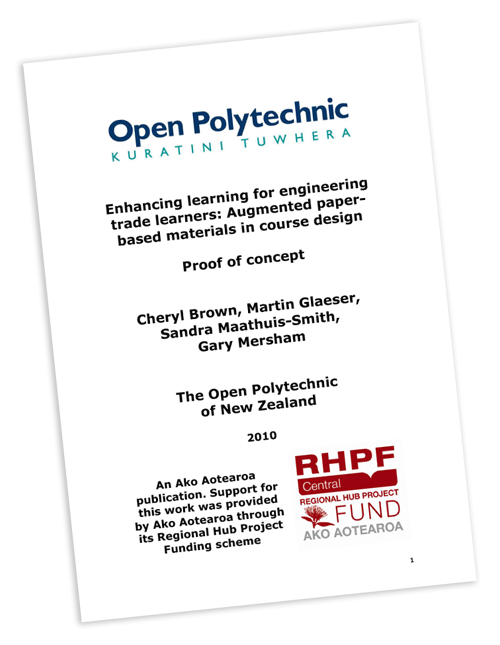
Enhancing learning for engineering trade learners

Augmented paper-based materials in course design

This report documents the results of attempts to improve the learning experience for apprentice engineering trade students using augmented reality technology. 

Download the report:

Background:

A project completed in 2010, undertaken by The Open Polytechnic of New Zealand, to test the feasibility of embedding augmented reality targets, which could be viewed on computers using a simple webcam, into print material for second-year apprentice engineering trade learners at the Open Polytechnic.

Report prepared by Cheryl Brown, Martin Glaeser, Sandra Maathuis-Smith and Gary Mersham.


Co-funded by the Ako Aotearoa Regional Hub Project Fund (RHPF)
Posted in Industry specific resources | Leave a comment

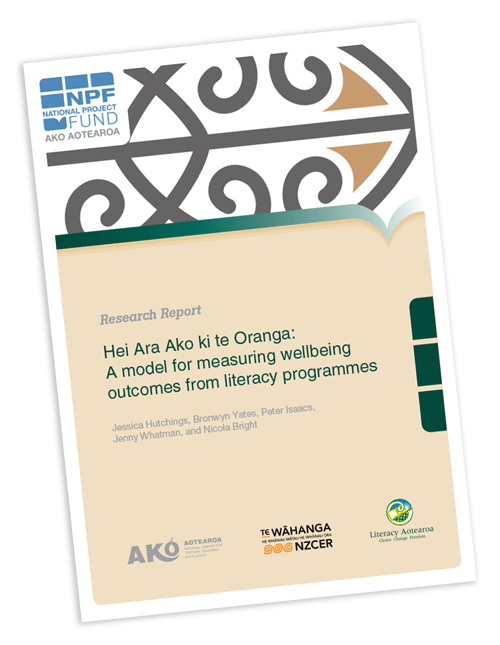
The kaupapa Māori wellbeing assessment model

Hei Ara Ako ki te Oranga

This report introduces the The kaupapa Māori wellbeing assessment model – Hei Ara Ako ki te Oranga Māori. This model can be used for assessing the literacy skills and overall wellbeing of Māori adult learners. By establishing a connection between literacy education and improved personal development, employability, family support, and relationships, the report seeks to enhance the understanding of Māori adult learners’ wellbeing outcomes.

While the Wellbeing Model is based on Literacy Aotearoa practice, it is intended to be used and adapted by other literacy providers.

It addresses the need of Māori literacy providers for relevant and appropriate assessment models of wellbeing for Māori, and it complements the Literacy and Numeracy Assessment Tool for Adults.

Download the report:

Background:

A project to develop a kaupapa Māori assessment model that demonstrates the link between literacy learning and wellbeing for Māori learners. A collaboration of Literacy Aotearoa and Te Wāhanga, New Zealand Council of Educational Research (NZCER).

The research report was prepared by Jessica Hutchings, Bronwyn Yates, Peter Isaacs, Jenny Whatman and Nicola Bright.


Co-funded by the Ako Aotearoa National Project Fund (NPF)

Posted in Language, Literacy and Numeracy (LLN) | Leave a comment