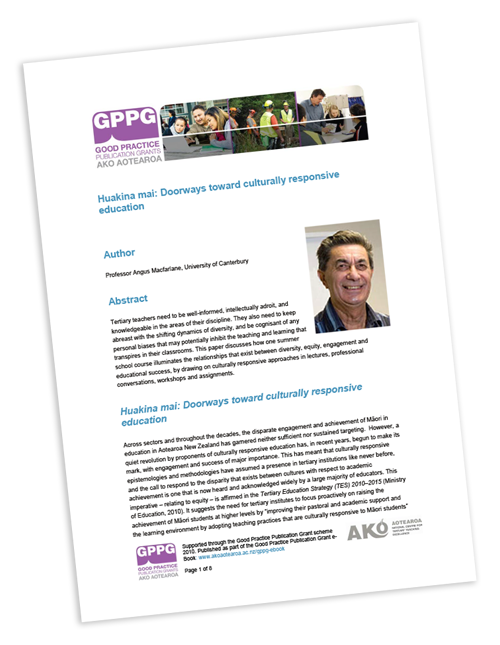
Huakina Mai: Doorways toward culturally responsive education

This report details the positive outcomes of a 6-week summer school course for educators that explored the relationships that exist between diversity, equity, engagement and educational success, by drawing on culturally responsive approaches in lectures, professional conversations, workshops and assignments.

Download the report:
Background:

A project, completed in 2013 at the University of Canterbury, to trial a course relevant for all educators willing to engage in responsive ways with cultural diversity, while also being aware of the impact of any personal biases that they might have.

Report prepared by Professor Angus Macfarlane


Co-funded by the Ako Aotearoa Good Practice Publication Grants scheme (GPPG)
Posted in Māori learner success | Leave a comment

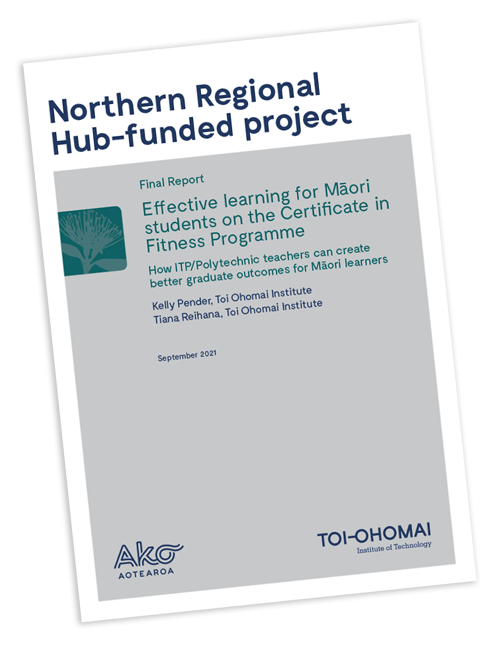
How ITP/Polytechnic teachers can create better graduate outcomes for Māori learners

This report identifies factors that led to positive outcomes for Māori learners within the Certificate in Fitness programme at Toi Ohomai Institute of Technology.

It shares aspects of practice and pedagogy that could be applied by any educators within the ITP environment to improve qualification outcomes for Māori students.

Download the report:

Background:

This project, completed in 2021 at Toi Ohomai Institute of Technology, sought to understand teacher influence on qualification outcomes for Māori students.

Report prepared by Kelly Pender and Tiana Reihana.


Co-funded by the Ako Aotearoa Regional Hub Project Fund (RHPF)

Posted in Māori learner success | Leave a comment

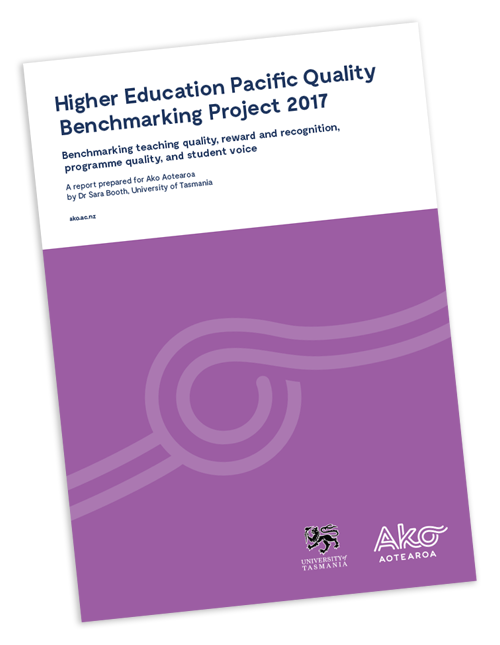
The higher education Pacific peer review quality project

This report shares good practice and areas for improvement in teaching quality, programme quality and student voice across the Pacific region.

It includes recommendations for developing a working model for collaboration across Higher education stakeholders in quality in the Pacific region.

Download the report:

Background:

A 9-month project, completed in 2018, to benchmark institutional processes on teaching quality, programme quality and student voice across the Pacific region.

A collaboration of The University of Tasmania, The National University of Samoa, The University of the South Pacific, The University of Waikato, and Manukau Institute of Technology.

A report prepared for Ako Aotearoa by Dr Sara Booth, University of Tasmania.


Co-funded by the Ako Aotearoa National Project Fund (NPF)

Posted in Pacific learner success | Leave a comment

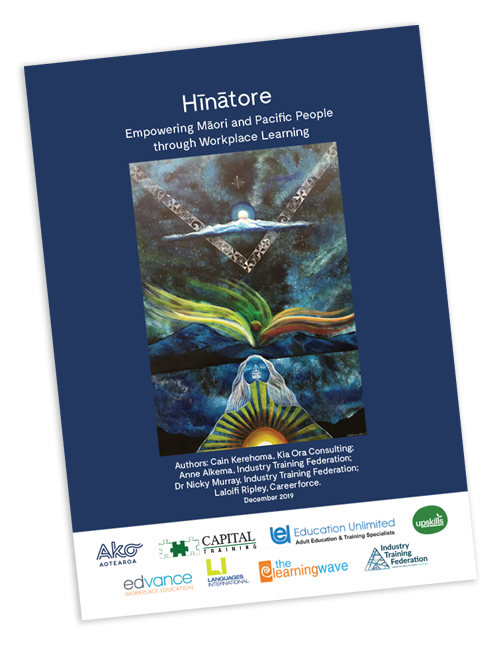
Hīnātore | Upskilling Māori and Pasifika workplace learners

This report documents the development of employees who undertook literacy and numeracy programmes in their workplaces, during work time.

Overall, the findings highlight that the workplace is a context that suits Māori and Pacific employees. The opportunity to train in work time removes access barriers, provides a safe, whanau-like learning environment, and builds on the knowledge and skills they already have as workers. This is enabled by workplaces where there is strong leadership and commitment from senior managers to the learning and development of their people.

Download the report:

Background:

A two-year project, completed in 2019, that examined the impact of workplace literacy and numeracy programmes on Māori and Pasifika employees, as well as the cultural values that underpin the programmes.

The programmes were funded through the Tertiary Education Commission’s (TEC) Workplace Literacy and Numeracy (WLN) Fund. Employees were eligible for funding if they had low or no qualifications, or low literacy and numeracy skills as measured against the Adult Learning Progressions. They were able to access to 25-80 hours of learning, usually undertaken in the workplace and in work time.

This was a collaboration of Kia Ora Consulting Ltd, Skills Highway (Industry Training Federation) and Careerforce ITO.

Report prepared by Cain Kerehoma – Kia Ora Consulting, Anne Alkema and Dr Nicky Murray – Industry Training Federation, and Laloifi Ripley – Careerforce.


Co-funded by the Ako Aotearoa National Project Fund (NPF)

Posted in Workplace learning | Leave a comment

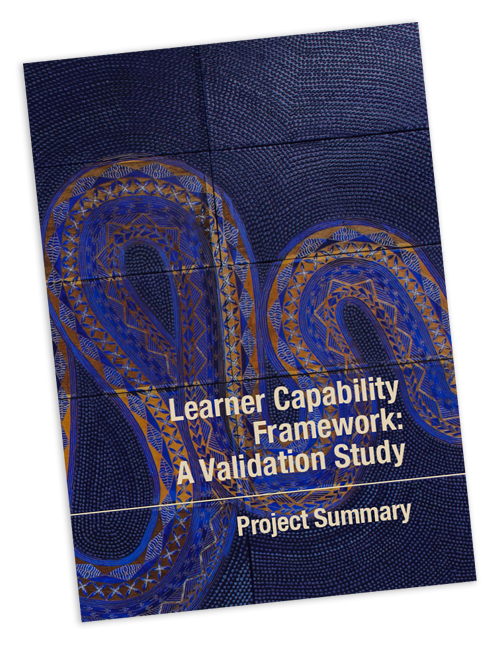
Learner capability framework: A validation study

This report documents efforts to create a method for learners to gain evidence of their transferable, employment-ready capabilities alongside their academic qualifications.

Download the report:

Background:

This collaborative project, completed in 2021 by Otago Polytechnic and Arai Te Uru Kokiri Training Centre, created a system to enable learners in any discipline and at all levels to show evidence of their transferable capabilities, in addition to their academic transcript.

Reports prepared by Leoni Schmidt, Michael Greaves, Liz Ditzel, Amber Paterson, Rhina Chan and Andy Kilsby.


Co-funded by the Ako Aotearoa National Project Fund (NPF)

Posted in Assessment | Leave a comment

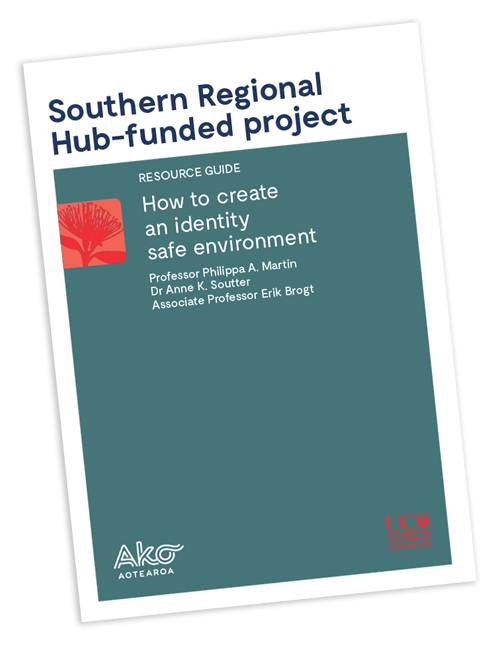
Assisting the formation of inclusive engineering cohorts

These guides outline ways educators can ensure that a student cohort develops to be supportive, constructive and inclusive to all.

They offer recommendations for organisations and programme leaders, and outline some simple things teaching staff can do at the start of a course to make people feel welcome and to foster a sense of belonging

Resource download:

Background:

A three-year project, completed in 2021 at the University of Canterbury, that investigated the effect of creating an inclusive cohort environment in engineering undergraduate education on student retention.

Resources prepared by Professor Philippa Martin, Dr Anne Soutter and Associate Professor Erik Brogt.


Co-funded by the Ako Aotearoa Regional Hub Project Fund (RHPF)

Posted in Student engagement | Leave a comment

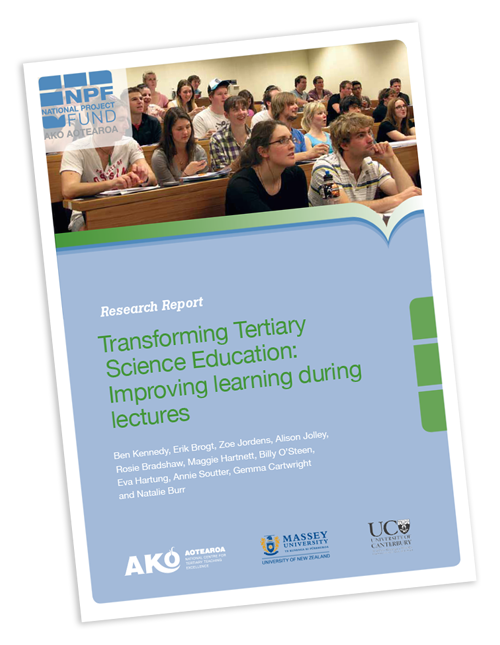
Transforming tertiary science education

Science education research shows that a traditional, stand-and-deliver lecture format is less effective than teaching strategies that are learner-centred and that promote active engagement.

The Carl Wieman Science Education Initiative (CWSEI) has used this research to develop resources to improve learning in university science courses.

This report details the successful adaptation and implementation of CWSEI in the New Zealand university context.

Download the report:

Background:

A pilot study, completed in 2013, to adapt the North American Carl Wieman Science Education Initiative (CWSEI) model to the New Zealand tertiary system within the geology and biology courses at the University of Canterbury and Massey University.

A collaboration involving the University of Canterbury, Massey University, Auckland University and the University of British Columbia.

Report prepared by Ben Kennedy, Erik Brogt, Zoe Jordens, Alison Jolley, Rosie Bradshaw, Maggie Hartnett, Billy O’Steen, Eva Hartung, Annie Soutter, Gemma Cartwright and Natalie Burr.


Co-funded by the Ako Aotearoa National Project Fund (NPF)

Posted in Curriculum | Leave a comment

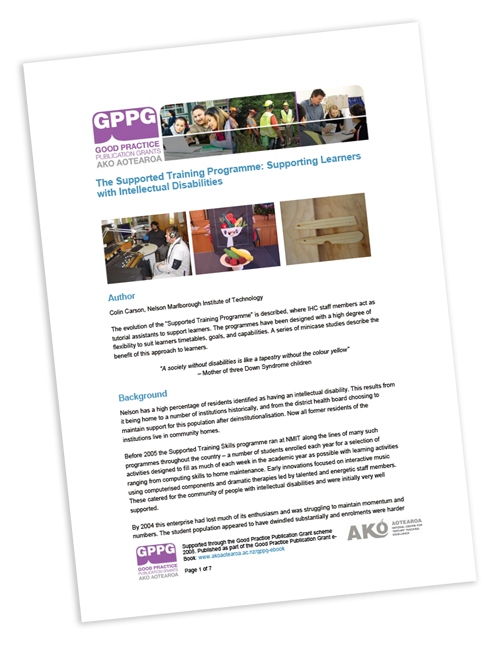
The Supported Training Programme: Supporting learners with intellectual disabilities

This report details how working collaboratively with the IHC enhanced the educational outcomes of intellectually disabled learners in training programmes at a New Zealand ITP.

Download the report:

Background:

A project completed in 2008, undertaken by Nelson Marlborough Institute of Technology (NMIT), to describe the evolution of the “Supported Training Programme”, where IHC staff members act as tutorial assistants to support learners.

Report prepared by Colin Carson.


Co-funded by the Ako Aotearoa Good Practice Publication Grants scheme (GPPG)
Posted in Accessibility | Leave a comment

The Scholarship of Teaching and Learning – A practical introduction and critique

This report introduces the concept of Scholarship of Teaching and Learning (SoTL) and discusses how it might benefit learners. 

Resource download:

Background:

A project, completed in 2010, to provide a short introduction to the Scholarship of Teaching and Learning (SoTL) to encourage practitioners to consider the concept and how it might benefit their learners. A collaboration of AUT University (lead organisation), Massey University and University of Canterbury.

Research report prepared by Peter Gossman, Neil Haigh and Xiaomin Jiao.


Co-funded by the Ako Aotearoa National Project Fund (NPF)

Posted in Strategic leadership and change | Leave a comment

The role of academic literacy in post-graduate hospitality education

This report details and investigation into the standards of academic writing at postgraduate level in hospitality education, and suggests some strategies that may improve students’ academic literacy.

Download the report:

Background:

A project completed in 2011, undertaken by AUT University, to explore the perceptions of postgraduate students, hospitality lecturers and hospitality practitioners of the role of academic literacy in post-graduate hospitality education.

Research report prepared by Pat Strauss, Warren Goodsir and Rachelle Ferguson.


Co-funded by the Ako Aotearoa Regional Hub Project Fund (RHPF)

Posted in Curriculum | Leave a comment

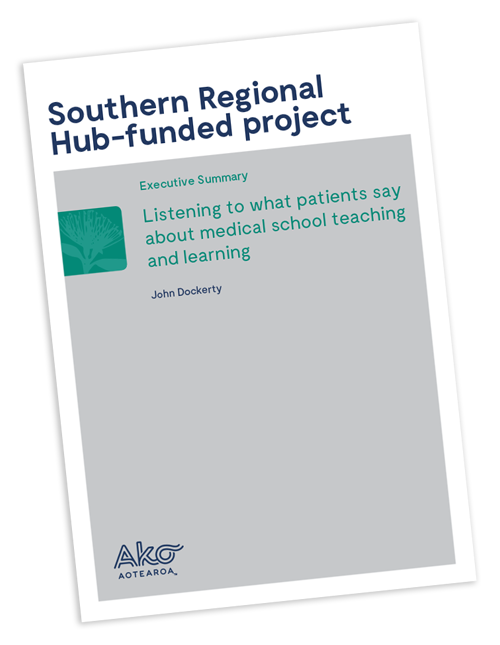
The quality of medical student teaching and learning – Through the eyes of patients

Schools of medicine regularly ask learners what they think of teaching, but the views of patients, who contribute greatly to their learning, are rarely sought.

This report documents a pilot study to develop a survey instrument for patients, to gather their views of teaching and learning in clinical settings and to use the findings for quality improvement in health professional training.

Download the report:

Background:

A project, completed in 2019 at the University of Otago, to encourage the regular involvement of patients in giving feedback to assure quality learning by health professionals in training through the development of a routine way of incorporating patients’ views into teaching and learning.

Report prepared by John Dockerty.


Co-funded by the Ako Aotearoa Regional Hub Project Fund (RHPF)

Posted in Assessment | Leave a comment

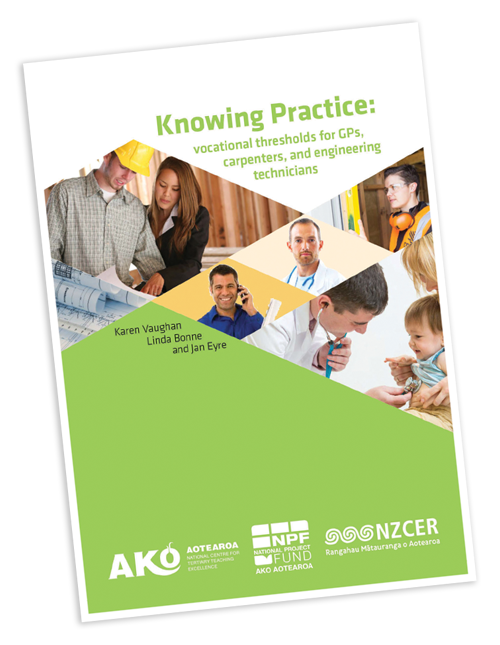
The knowing practice project

This report documents an investigation to understand the way in which practice-based learning functioned using three different fields: general practice medicine, carpentry, and civil engineering technician work.

It aimed to discover how learners integrate theory and practice, and the effectiveness of workplace experiences for learning, through interviews and observations with learner-practitioners and their formal on-job learning supporters.

Download the report:

Background:

A two-year New Zealand Council for Educational Research project, completed in 2015, to understand the way in which practice-based learning operates across three different occupational fields General Practice (GP) medicine, building and engineering.

Report prepared by Karen Vaughan, Linda Bonne and Jan Eyre.


Co-funded by the Ako Aotearoa National Project Fund (NPF)

Posted in Industry specific resources | Leave a comment

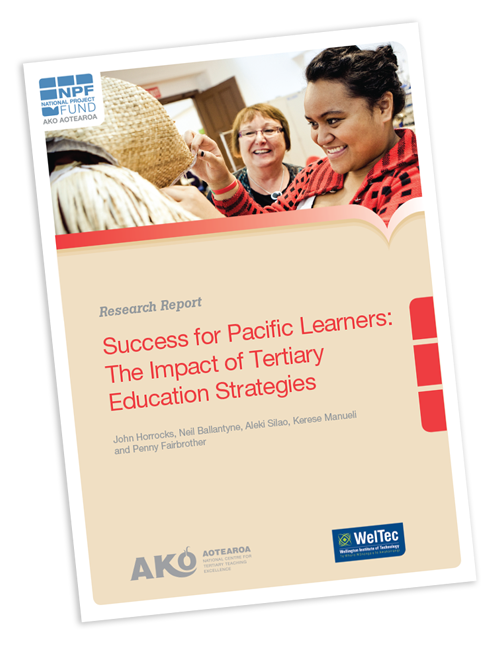
The impact of Tertiary Education Strategies on Pacific learning success

This report evaluates the impact of three successive tertiary education strategies on Pasifika learning success.

Download the report:

Background:

An 18-month Wellington Institute of Technology project that examined the impact of three successive tertiary education strategies (implemented between 2002 and 2015) on support for Pacific learners offered by tertiary institutions.

It looked at how government strategy documents influenced institutional strategies and organisational change to support the participation and success of Pasifika learners, and the perceptions of tertiary education institutions on how the Tertiary Education Commission (TEC) and other government agencies have incentivised and supported these organisational changes.

Research report prepared by Dr John Horrocks, Neil Ballantyne, Aleki Silao, Kerese Manueli and Penny Fairbrother. 


Co-funded by the Ako Aotearoa National Project Fund (NPF)

Posted in Pacific learner success | Leave a comment

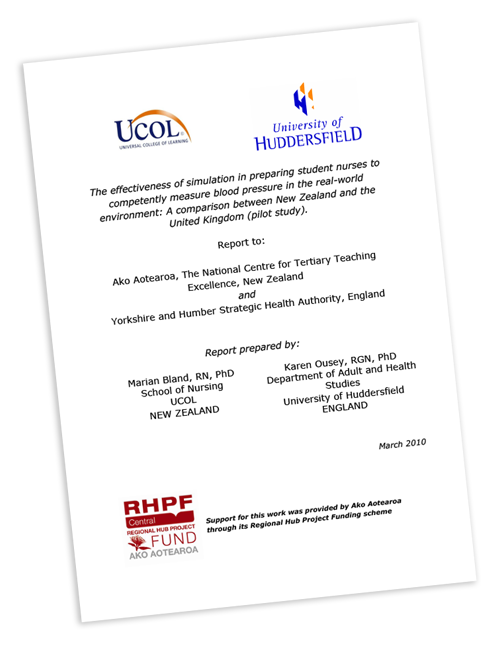
The effectiveness of simulation in preparing student nurses to competently measure blood pressure in the real-world environment

This report documents an evaluation of the effectiveness of using simulations in the teaching of clinical skills to first year nursing students. It uses the clinical skill of blood pressure measurement as the focus for the research project, and compares data from New Zealand and the United Kingdom.

Download the report:

Background:

A project, completed in 2010, to investigate simulation as a learning and teaching strategy for a variety of clinical skills to Year One nursing students. A collaboration of the School of Nursing, Universal College of Learning, New Zealand, and the Department of Nursing and Health Studies, University of Huddersfield, England.


Co-funded by the Ako Aotearoa Regional Hub Project Fund (RHPF)

Posted in Industry specific resources | Leave a comment

The effectiveness of providing second language (L2) writers with on-line written corrective feedback

This report documents study into the effectiveness of different types of written corrective feedback when provided online, for second language writers at a pre-degree level.

Download the report:

Background:

A project, completed in 2010, to investigate the extent to which second language writers at a pre-degree level benefit from written corrective feedback on their writing when delivered on-line. A collaboration of AUT University and University of Auckland.

Research report prepared by John Bitchener, Martin East and Helen Cartner.


Co-funded by the Ako Aotearoa Regional Hub Project Fund (RHPF)

Posted in Online learning | Leave a comment

The effectiveness of peer learning in a vocational educational setting

This report introduces structured strategies for teachers to introduce peer learning activities into workshop-based practical learning activities and class-room based theory learning activities.

Download the report:

Background:

A project completed in 2012, undertaken by Christchurch Polytechnic Institute of Technology, to investigate peer learning processes by students across four pre-trade programmes (Carpentry, Painting and Decoration, Electrical, and Welding) at Christchurch Polytechnic Institute of Technology (CPIT).

Research report prepared by Flip Leijten and Selena Chan.


Co-funded by the Ako Aotearoa Regional Hub Project Fund (RHPF)

Posted in Trades training | Leave a comment

He Moana Pukepuke e Ekengia e te Waka

A choppy sea can be navigated

This report describes the outcomes from a programme where non-traditional and second-chance learners were exposed to contextualised academic up-skilling using critical reflection.

Download the report:

Background:

This project, completed in 2011, examined the use of a holistic approach in a programme that included contextualised, ‘mana-enhancing’ academic up skilling to make the most of student ‘passion’ for their chosen course.

The educational environment and pedagogical practices allowed a very high percentage of the learners to complete a Bachelor of Applied Social Work (Bicultural) (BASW) successfully. 

Report prepared by Ellen Cath Dickey, Manukau Institute of Technology


Co-funded by the Ako Aotearoa Good Practice Publication Grants scheme (GPPG)
Posted in Educational transitions | Leave a comment

Hei Toko i Te Tukunga – Enabling Māori learner success

Hei Toko is a Kaupapa Māori framework for tertiary educators working with Māori learners.

It aims to introduce tertiary educators to the design and evaluation of teaching strategies and practices that lead to enhanced outcomes for Māori learners.

The report shares descriptions and evaluations of Kaupapa Māori good practice that can be used by a organisations, boards, departments, or individual educators.

Download the report:

Background:

An 18-month project, completed in 2015, to enable organisations to develop a kaupapa Māori-based formative evaluation approach that is relevant to their organisation context.

A collaboration of Ako Aotearoa, Te Taura Whiri i te reo Māori (Māori Language Commission) and the Tertiary Education Commission (TEC).

Research report prepared by Ngāhiwi Apanui and Tama Kirikiri.


Posted in Māori learner success | Leave a comment

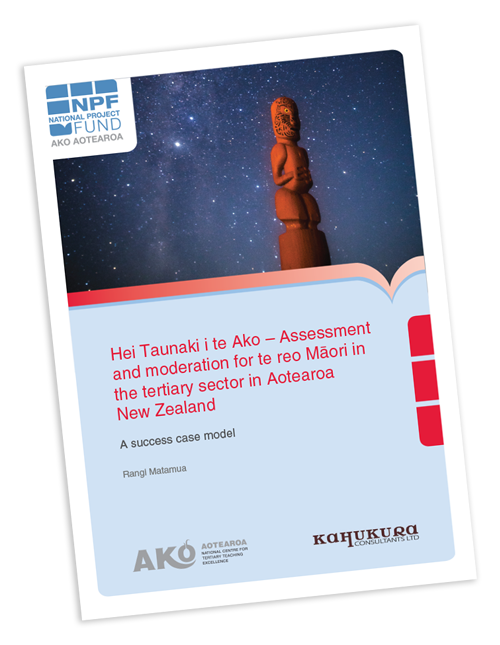
Hei Taunaki i te Ako

Assessment and moderation for te reo Māori in the Tertiary sector in Aotearoa New Zealand

This report presents a summary of good practice that relates to assessment and moderation standards for te reo Māori in the tertiary sector, based on the study of four successful te reo Māori tertiary programmes.

The accompanying poster can provide a handy quick-refence for educators. The recommendations are displayed in both English and te reo Māori.

Resource download:

Background:

A project, completed in 2016, to establish a better understanding of good practice in terms of assessing and moderating te reo Māori at the tertiary level. A collaboration involving Te Wānanga o Aotearoa, The University of Waikato, Auckland University of Technology and Te Panekiretanga o te Reo Māori, led by Kahukura Consultants.

Research report prepared by Rangi Matamua.


Co-funded by the Ako Aotearoa National Project Fund (NPF)

Posted in Māori learner success | Leave a comment

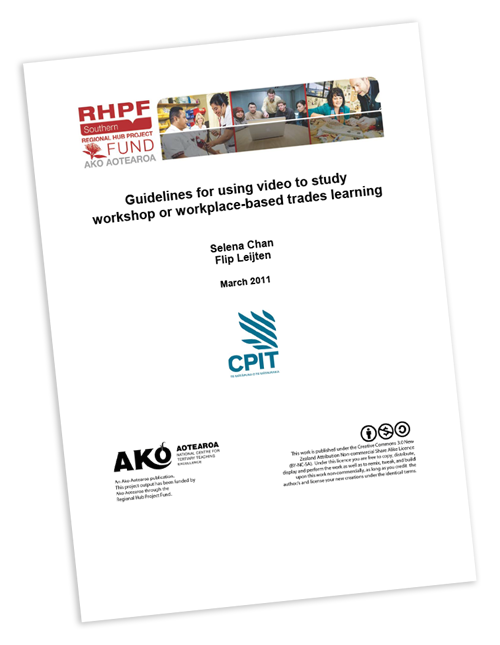
Guidelines for using video to study workshop or workplace-based trades learning

This report contains guidelines to help teachers /workplace trainers study the learning of trade skills and knowledge by students or apprentices in classrooms, workshops or in the workplace by using videos and the multimodal discourse analysis method.

Download the report:

Background:

A project completed in 2011 at Christchurch Polytechnic Institute of Technology, to develop guidelines on how to use videos to collect and learn about trades skills and knowledge acquisition.

Research report prepared by Selena Chan and Flip Leijten.


Co-funded by the Ako Aotearoa Regional Hub Project Fund (RHPF)

Posted in Trades training | Leave a comment

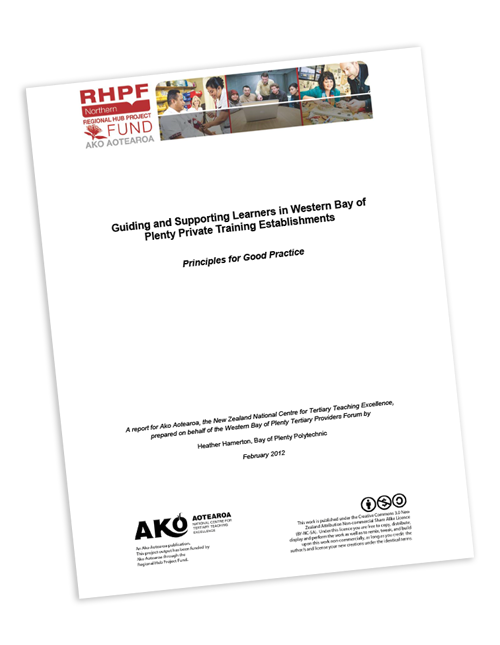
Guiding and supporting learners

This report shares strategies used by Private Training Establishments (PTEs) in the Western Bay of Plenty to provide support for students, and the effectiveness of this from a student perspective.

Download the report:

Background:

A project, completed in March 2012, to collate successful practice strategie from Private Training Establishments (PTEs) in the Western Bay of Plenty. A collaboration of Bay of Plenty Polytechnic, University of Waikato, Bethlehem Tertiary Institute and Adventure Education.

Research report prepared on behalf of the Western Bay of Plenty Tertiary Providers Forum by Heather Hamerton.


Co-funded by the Ako Aotearoa Regional Hub Project Fund (RHPF)

Posted in Student engagement | Leave a comment

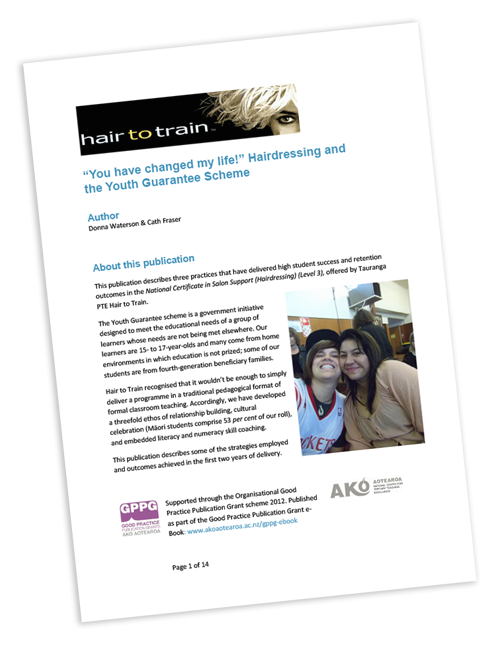
“You have changed my life!” | Hairdressing and the Youth Guarantee Scheme

This report describes the three key practices that have delivered high student success and retention outcomes in hairdressing on the Youth Guarantee Scheme at a Private Training Establishment.

Download the report:

Background:

A project, completed in 2013, that aimed to increase students’ attendance, completion and graduation outcomes, and improve students’ reading, writing and numeracy competence at Tauranga Private Training Establishment Hair to Train.

Report prepared by Donna Waterson and Cath Fraser.


Co-funded by the Ako Aotearoa Good Practice Publication Grants scheme (GPPG)
Posted in Trades training | Leave a comment

Getting it right: Guidelines for online assessment in New Zealand tertiary contexts

This report identifies the key elements of effective online assessment practice and provides support for tertiary teachers to develop the requisite technological and pedagogical skills to develop their own online assessment practices.

NOTE: the Online Assessment Tool Selector (OATS) website mentioned in the report is no longer available.

Download the report:

Background:

An 18-month research project designed to provide New Zealand tertiary teachers with resources to review and develop their online assessment practices. A collaboration of Unitec Institute of Technology, Massey University and Auckland University of Technology.

Research report prepared by Jane Terrell.


Co-funded by the Ako Aotearoa Regional Hub Project Fund (RHPF)

Posted in Assessment | Leave a comment

Extending hospitality student’s experiences of real-world practice

This report introduces guidelines for improving hospitality students’ reflective practice and digital evaluation skills. 

Download the report:

Background:

This project, completed in 2013 at Christchurch Polytechnic Institute of Technology, aimed to help hospitality students learn, practise and fine-tune the important ‘service orientation’ dispositional skill sets and digital evaluative skills critical to practice as hotel front office receptionists.

Research report prepared by Selena Chan, Heather McEwan and Debby Taylor.


Co-funded by the Ako Aotearoa Regional Hub Project Fund (RHPF)

Posted in Industry specific resources | Leave a comment

Good practice in international placements

Ideas for students and tertiary staff

This report considers seven key aspects that drive good practice in international field education.

The experiences described in this booklet were with social work programmes, however, it is expected that the information can be applied to courses across a spectrum of disciplines. 

Download the report:

Background:

This project, completed in 2016, aimed to help guide educators and students who are considering or developing international placements.

Report prepared by by Dr Kathryn Hay and Simon Lowe.


Co-funded by the Ako Aotearoa Good Practice Publication Grants scheme (GPPG)
Posted in Curriculum | Leave a comment

ESOL Teaching skills taskbook unit

The ESOL Teaching Skills (ETS) TaskBook is a professional development resource comprising 40 stand-alone tasks that focus on different aspects of teaching English to speakers of other languages.

The ETS TaskBook is a flexible resource that allows organisations to provide their teachers with practical professional development opportunities.

The ETS TaskBook is suitable for English language teachers in a variety of contexts. For pre-service or less experienced teachers, it may be a way of gaining a deeper understanding of ESOL teaching methodology. For more experienced teachers, it may act as a useful refresher and springboard for further study.

Resource download:

Background:

A project completed in 2009, undertaken by Languages International, Auckland, to develop a resource, the English for Speakers of Other Languages (ESOL) Teaching Skills Taskbook, which will enable ESOL teachers to develop their teaching skills.


Co-funded by the Ako Aotearoa Regional Hub Project Fund (RHPF)

Posted in Language, Literacy and Numeracy (LLN) | Leave a comment

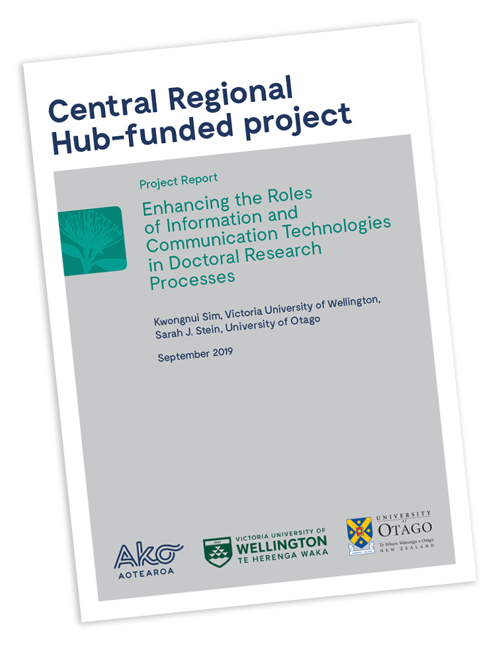
Enhancing the role of ICT in doctoral research processes

The report provides recommendations for developing practical approaches to information communication technologies (ICT) training provision for use by institutions, supervisors, doctoral students, and ICT support.

Resource download:

Background:

Information communication technologies (ICT) have long been important in supporting doctoral study. But while ICTs are prominent in educational practices at most levels of formal learning, there is relatively little known about the skills and understandings that underlie their effective and efficient use in research higher degree settings.

This project, completed in 2019, aimed to identify doctoral supervisors’ and students’ perceptions of their roles in using ICT.

Report prepared by Kwongnui Sim – Victoria University of Wellington, and Sarah J. Stein – University of Otago.


Co-funded by the Ako Aotearoa Regional Hub Project Fund (RHPF)

Posted in Research methodologies | Leave a comment

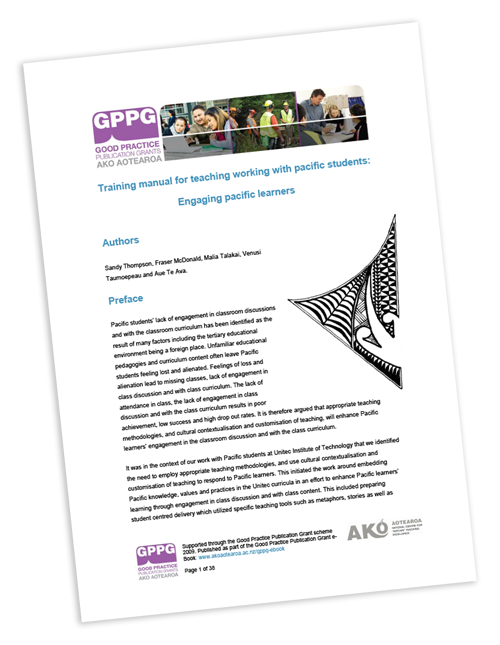
Training manual for teachers working with Pacific students

Engaging Pacific learners

This report and accompanying videos will assist teachers working with Pacific students in tertiary settings by providing ways to enhance their ability to engage in class discussion and content.

Download the report:

Supporting videos:

Background:

A project, completed in 2009, at Unitec Institute of Technology, to develop a resource to assist teachers working with Pacific students in tertiary settings by providing ways to enhance their ability to engage in class discussion and content.

Research report prepared by Sandy Thompson, Fraser McDonald, Malia Talakai, Venusi Taumoepeau and Aue Te Ava.


Co-funded by the Ako Aotearoa Regional Hub Project Fund (RHPF)

Posted in Pacific learner success | Leave a comment

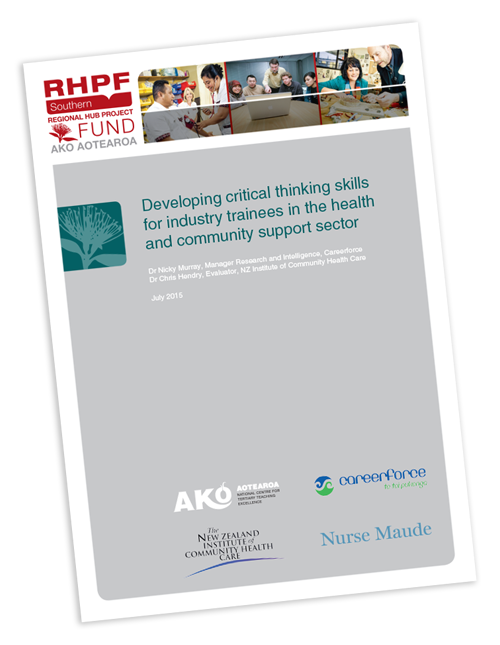
Developing the critical thinking skills of health and community support sector trainees

This report documents the development and evaluation of programme designed to enable health service-based workplace trainers to teach critical thinking skills.

Download the report:

Background:

A project, completed in 2015, to provide targeted professional development to workplace educators in the health and community support sector to enable them to strengthen and deepen the critical thinking skills of their learners.

A collaboration of Careerforce, New Zealand Institute of Community Health Care and Nurse Maude.

Research report prepared by Nicky Murray and Chris Hendry.


Co-funded by the Ako Aotearoa Regional Hub Project Fund (RHPF)

Posted in Industry specific resources | Leave a comment

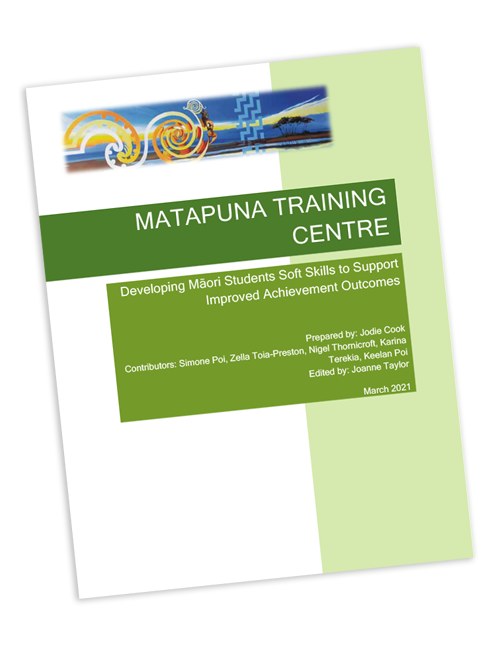
Developing Māori students’ soft skills to support improved achievement outcomes

This report measures and evaluates progress Māori students made over time in the “soft skills” and shows evidence the correlation between course achievement and students’ soft skills improvement.

Download the report:

Background:

Tutors at Matapuna Training Centre (MTC) identified that supporting students to develop their soft skill capabilities had the potential to contribute to improved student achievement outcomes.

The project identified a set of soft skill descriptors that Matapuna staff know students need to develop in order to achieve at NZQA level 1 and 2, captured a group of students’ development in soft skills over time, and examined the links between soft skill development and successful student achievement outcomes.

Report prepared by Jodie Cook.


Co-funded by the Ako Aotearoa Regional Hub Project Fund (RHPF)

Posted in Educational transitions | Leave a comment