Te Whaihanga – Preparing students to work with Māori

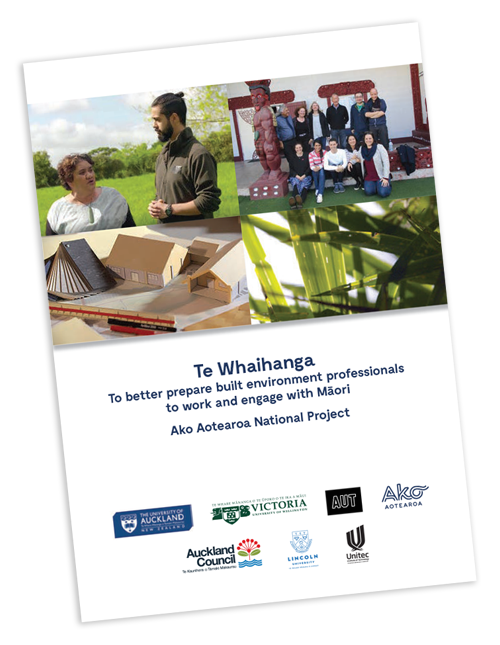
This report, and accompanying videos, will provide support for teaching and learning in the planning, architecture, engineering and landscape architecture disciplines to help built environment professionals and students learn why and how it is important to engage effectively with Māori.

The report includes a Text-Based Learning Module which explores the “Why” aspect of the engagement process, a Knowledge Assessment Tool that can be used by teachers and students to assess their prior knowledge or for exam questions, a Critical Incident Analysis Tool that can be used can be used as the basis for an assignment or a workshop, and transcripts for use with the four videos in the Te Whaihanga series.

Download the report:

Supporting videos:

Presented by UNITEC lecturer in Māori architecture, Rau Hoskings, these videos were prepared by the project team for use in facilitated learning situations.

Background:

This award-winning two-year project, completed in 2019, aimed to develop research-based, online video and supporting material for teaching and learning in the planning, architecture, engineering and landscape architecture disciplines, with a view to preparing student professionals, both Māori and non-Māori, when working with Māori.

The project team included teachers from planning, architecture, engineering and landscape architecture at the University of Auckland, Auckland University of Technology (AUT), Victoria University of Wellington, Unitec Institute of Technology, Papa Pounamu, Whenua Design, The New Zealand Institute of Architects, University of Victoria and Glasgow University.

Reports prepared by Dory Reeves and Lena Henry, from the University of Auckland.


Co-funded by the Ako Aotearoa National Project Fund (NPF)
Posted in Industry specific resources | Leave a comment

Ako Whakaruruhau – Implementing and evaluating good practice for Māori trade training

This report, and accompanying resources, have been produced to provide good practice guidance for workplace mentors and organisations to support Māori apprentices in their workplaces.

Ako Whakaruruhau focuses on the quality of the teaching, learning, mentoring and the support that apprentices receive throughout their apprenticeship journey.

Resource download:

Background:

An action research project, completed in 2016, to enhance success for Māori by supporting organisations to address internal cultural competency and good practice for Māori in trades training.

This research built on a model used in a previous research project – Te Ako Tiketike – Māori as Successful Workplace Learners at Hawkins Construction and the He Toki ki te Mahi Group Training Scheme. The project implemented Te Ako Tiketike, an evidence based theory model, and identify its outcomes for learners, as well as the mechanisms, systems and structures required to implement the model.

A collaboration of Ihi Research, Hawkins Construction, Te Tapuae o Rehua and Ako Aotearoa.

Report prepared by Catherine Savage.


Co-funded by the Ako Aotearoa National Project Fund (NPF)
Posted in Trades training | Leave a comment

Women in Trades – Characteristics of an effective learning journey

These reports document an study that aimed to increase the participation and success of women in trades.

The research programme was delivered over three years through three interrelated focus areas:

  • Working directly with in-trade women to unpack the learning and career journeys of women who have succeeded in the trades to discover what we can be learned from their experiences.
  • Working with trade employers to gain the perspective from a balanced mix of 565 employers who have or have not employed women.
  • Working with an extensive quantitative analysis of the trades sector workforce to establish benchmarks and measure change.

The findings will be helpful to stakeholders to inform decision making, with a key focus on supporting women in trades and the impact of engagement with vocational education and training.

The series of accompanying resources offer tools and ideas for providers, employers and potential apprentices to support the participation and success of women in trades.

Resource download:

Background:

A three-year project, completed in 2021, that was jointly commissioned by the Ministry for Women and Ako Aotearoa, to increase the participation and success of women in construction and engineering related trades where they are traditionally under-represented.

A collaboration of five Industry Training Organisations, Manukau Institute of Technology, industry and educational organisations and secondary schools.

Reports prepared by Kylie Taffard, UMR Market Research, Loretta Garrow, Mark Williams and Scarlatti.


Co-funded by the Ako Aotearoa National Project Fund (NPF)
Posted in Trades training | Leave a comment

Learning to conduct collaborative social work research in the field

This report documents the creation of a resource to facilitate authentic, research-focused, learning and teaching experiences for social work students on placement in a range of social service industry settings.

The Practising Research Cards are a comprehensive set of research teaching and learning cards that have been developed for use by academics, field educators and learners, both in classroom settings and in the field.

Supporting videos include comments from field educators and students on their experience of conducting research in a placement setting.

Resource download:

Supporting videos:

Participants discuss the projects they undertook, the challenges they faced and overcame, and the knowledge development they experienced through conducting practice research.

Background:

Whilst research has long been considered a critical component of social work education, previous research in the area has identified concerns about student and graduate competence, confidence, and attitude towards research. These concerns, together with calls for learning about research to be situated in practice settings, led to an investigation to consider how research teaching might become more fully integrated into field education.

This project, completed in 2012, aimed to facilitate authentic, research-focused, learning and teaching experiences for social work students on placement in a range of social service industry settings.

A collaboration of Christchurch Polytechnic Institute of Technology (CPIT) and University of Canterbury (UC).

Report prepared by Jane Maidment, Dominic Chilvers and Yvonne Crichton-Hill.


Co-funded by the Ako Aotearoa Regional Hub Project Fund (RHPF)

Posted in Research methodologies | Leave a comment

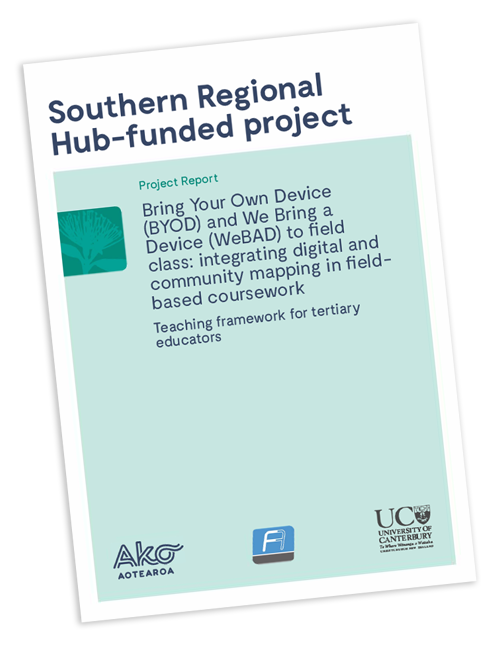
Bring Your Own Device (BYOD) to field class

Integrating digital and community mapping in field-based coursework

This report provides an analysis and evaluation of a Bring Your Own Device (BYOD)
initiative for field trips in Earth Science classes to supplement traditional field techniques in the geosciences with new technologies that improve learning outcomes.

The accompanying framework will help guide educators in their decision-making process around BYOD in field trips as well as providing a recommended workflow.

Resource download:

Supporting videos:

BYOD to field class | Dr Tim Stahl from the University of Canterbury talks about the Arc Collector app which is used by fieldworkers to capture data. He talks about how to use it, the benefits of it and how it compares to similar apps.

Admin role | John Thyne from the University of Canterbury explains the admin role of the Arc GIS site and the different ways that students can access and use the data. 

Project prep | Dr Heather Purdie and Dr Sam Hampton from the University of Canterbury talk about how to adequately prepare to use apps and devices with your class, in particular Arc Collector. 

Evidence informed practice | Associate Professor Erik Brogt, Dr Kate Pedley and Dr Tim Stahl from the University of Canterbury talk about how to integrate the use of devices effectively so that they aid the learning and don’t take away from it.  

Student training | Dr Tim Stahl, Dr Heather Purdie and Dr Kate Pedley from the University of Canterbury explain what they do to train students to use the apps and devices and why it’s important. 

Pre feild prep | Dr Tim Stahl and Dr Kate Pedley from the University of Canterbury talk about how they prepare their students for going out into the field and explain what processes need to be done in advance.  

Non-research student feedback | Students from the University of Canterbury give their feedback on how they find using devices during field-based coursework, what they use them for and how they use them

Research student feedback | Students from the University of Canterbury give their feedback on how they find using devices for field-based coursework. 

Background:

A 2-year project, completed in 2020, to utilise a field data collection app to incorporate technology, improve spatial awareness and sense of place, and develop community mapping programmes in geology and geography field classes.

A collaboration of the University of Canterbury and Frontiers Abroad.

Resources prepared by Tim Stahl, Heather Purdie, Dona Banerjee, Erik Brogt, Kate Pedley, Sam Hampton, Ben Kennedy and Jon Thyne.


Co-funded by the Ako Aotearoa Regional Hub Project Fund (RHPF)

Posted in Using technology in education | Leave a comment

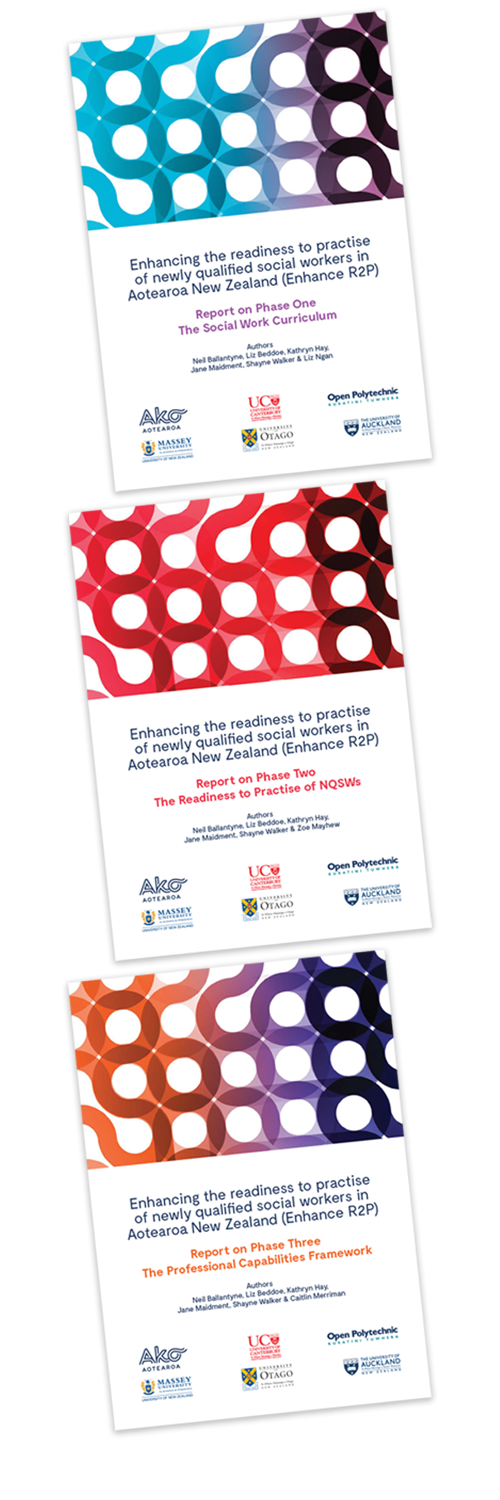
Enhancing the readiness to practise of newly qualified social workers

Enhance R2P

These resources form an evidence-informed, industry agreed, professional capabilities framework that will inform the design of pre- and post-qualifying social work education programmes, setting clear expectations for the capabilities and continuing professional development of social workers.

The phase one report focuses on the question: What is the content of the current New Zealand social work curriculum and how does it relate to the ten core competence standards of the Social Workers Registration Board (SWRB)?

The phase two report focuses on the question: How well-prepared are Newly qualified Social Workers (NQSWs) (social workers in their first two years of practice) to enter professional social work, and how is their learning being supported and enhanced in the workplace?

The phase three report focuses on the question: what are the professional capabilities, including cultural capabilities, we should expect of newly qualified social workers and of social workers working at beginning, and experienced, levels of practice?

Resource download:

Background:

A three-year project, completed in 2019, that aimed to develop a professional capabilities framework, clarifying the capabilities of newly qualified social workers and social workers at experienced and advanced levels of practice.

The project included social work academics from Open Polytechnic, The University of Auckland, Massey University, the University of Canterbury and the University of Otago. The Social Workers Registration Board (SWRB) was represented on the project’s advisory group.

Reports prepared by Neil Ballantyne, Liz Beddoe, Kathryn Hay, Jane Maidment, Shayne Walker and Liz Ngan.


Co-funded by the Ako Aotearoa National Project Fund (NPF)
Posted in Industry specific resources | Leave a comment

Demystifying addiction through personal stories

An online educational resource

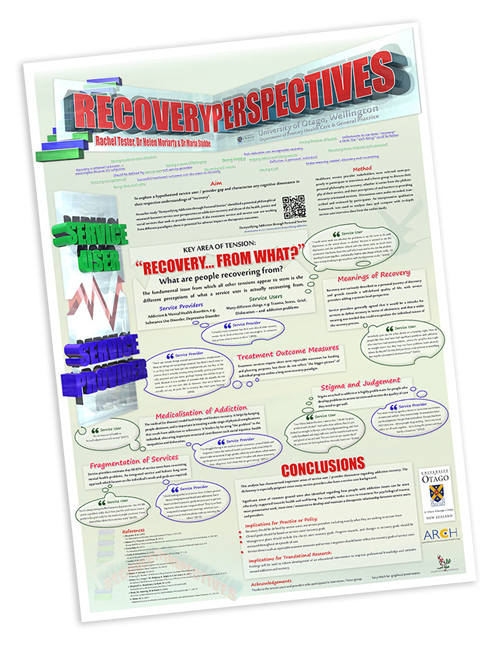
These videos, and accompanying resources, were created to provide information about addiction (in particular recovery from addiction) from the service user perspective to medical students and health professional students.

Demystifying Addiction Project | Video playlist on Youtube

Resource download:

Background:

A project completed in 2015, undertaken by University of Otago, Wellington, to develop an online resource for health students about recovery from addiction from a service user perspective. 

Resources developed by Rachel Tester, Helen Moriarty and Maria Stubbe.


Co-funded by the Ako Aotearoa Regional Hub Project Fund (RHPF)

Posted in Industry specific resources | Leave a comment

Gender, timing and life circumstances – Motivational factors influencing student participation

Studies in New Zealand indicate that many ICT professionals, whatever route they have taken to qualify themselves, often seek management skills in mid-career.

This report investigates motivational factors influencing mid-career student participation in management programmes.

While the study focusses on management programmes, the findings could inform how to ensure greater alignment with student needs and increase engagement for mid-career / returning students in a variety of fields.

Download the report:

Background:

A project, completed in 2009 at Victoria University of Wellington, to examine the motivational factors influencing student participation in a post-experience taught management programme.

Report prepared by Tony Hooper.


Co-funded by the Ako Aotearoa Regional Hub Project Fund (RHPF)

Posted in Student engagement | Comments Off on Gender, timing and life circumstances – Motivational factors influencing student participation

eCollaboration in learning, teaching and research

This literature review is of studies of academic collaborations, remote collaborations and ecollaborations. 

It presents an overview of different types of collaborations in research, teaching and learning, and identifies common tasks, activities and functions associated with remote collaborations.

The focus of this review is, in particular, on identifying the kinds of processes that take place in successful e-collaborations and the kinds of technologies that are able to support these processes.

The reviews aims to support the development of our understanding of the nature of collaborative activities, especially those involving remote participation.

Download the report:

Background:

A project completed in 2008, undertaken by Victoria University of Wellington, to carry out a literature review of studies of academic collaborations and e-collaborations conducted within the framework of a project that aims to develop the capability of staff in the tertiary sector to set up and carry out effective remote collaborations as part of their teaching or research activities.

Literature review prepared by Irina Elgort and Tony Wilson.


Co-funded by the Ako Aotearoa Regional Hub Project Fund (RHPF)

Posted in Professional learning | Comments Off on eCollaboration in learning, teaching and research

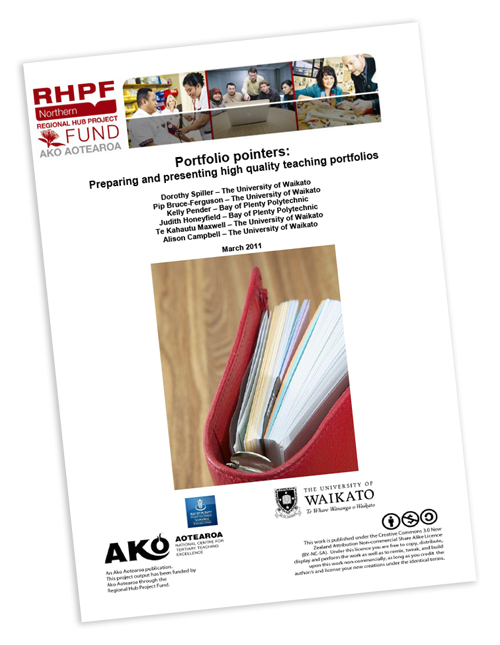
Portfolio Pointers: Preparing and presenting high quality teaching portfolios

Teaching portfolios have been used in the education sector for many years. Compiling a portfolio is often a significant part of professional development programmes, and is frequently required for career advancement purposes or tertiary teaching position applications.

This report presents a set of guidelines for creating high quality teaching portfolios suitable for the Tertiary Teaching Excellence Awards or for other similar purposes.

Download the report:

Background:

A project, completed in 2011, to produce a set of guidelines to simplify the portfolio development process for teaching award nominees and those who advise and support them.

The project team worked collaboratively with a group of National Teaching Excellence Award winners and their supporters to develop and refine the guidelines.

A collaboration of The University of Waikato and Bay of Plenty Polytechnic.

Rreport prepared by Dorothy Spiller, Pip Bruce-Ferguson, Kelly Pender, Judith Honeyfield, Te Kahautu Maxwell and Alison Campbell. 


Co-funded by the Ako Aotearoa Regional Hub Project Fund (RHPF)

Posted in Professional learning | Leave a comment

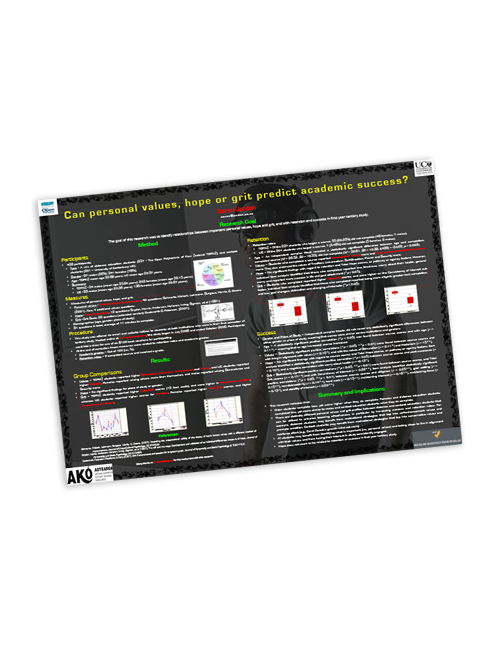
Using values, hope and grit to predict academic success and retention in first year Tertiary Study

This poster documents the findings of an investigation into the relationships between important personal values, hope and grit (perseverance), with retention and success in first year tertiary study.

Resource download:

Background:

A project, completed in 2009, to identify if personal values could predict success or retention in first year tertiary students.

A collaboration of The Open Polytechnic of New Zealand and University of Canterbury.

Poster produced by Aaron Jarden.


Co-funded by the Ako Aotearoa Regional Hub Project Fund (RHPF)

Posted in Student engagement | Leave a comment

Predictive working tool for early identification of ‘at risk’ students

This report document an investigation into the effectiveness of a model for early prediction of study outcomes, specifically ‘at risk’ students, using student enrolment data.

Download the report:

Background:

A project completed in 2010, undertaken by Open Polytechnic, that aimed to determine the extent to which data captured by the enrolment form could help to identify future successful and unsuccessful students before the course began to better focus support on those students statistically more likely to fail.

These include socio-demographic variables such as age, gender, ethnicity, education, work status, and disability as well as variables related to the particular course and study environment.

Report prepared by Zlatko Kovačić and John Green.


Co-funded by the Ako Aotearoa Regional Hub Project Fund (RHPF)

Posted in Student engagement | Leave a comment

Preparedness for sudden change

Lessons from managing large-scale disruption within a Bachelor of Nursing community

This report documents an investigation into the effects of the 2011 Christchurch earthquake on a tertiary learning community.

It shares the process of the initial response to the disaster and meeting safety needs, and the way in which the usual ‘business’ of teaching and learning was suspended, superseded, and reconfigured.

The lessons learned from this experience can assist other New Zealand tertiary education organisations to inform their preparedness for sudden change.

Download the report:

Background:

A one-year project completed in 2012, undertaken by Christchurch Polytechnic Institute of Technology after the 2011 Christchurch earthquake, to identify and describe the impact of a sudden, traumatic natural event on the capacity to deliver a teaching/learning programme, and explore the most effective ways to minimise disruption to programme delivery and student learning.

Report prepared by Lesley Seaton, Philippa Seaton, Judy Yarwood and Melanie Ryan.


Co-funded by the Ako Aotearoa Regional Hub Project Fund (RHPF)

Posted in Curriculum | Leave a comment

How to make a successful pre-trades course for Pacific learners

This report documents the factors that contributed to the successful completion of pre-trades courses by Pacific learners at Wellington Institute of Technology (WelTec).

Download the report:

Background:

A year-long project, completed in 2014 at Wellington Institute of Technology (WelTec), that aimed to evaluate in detail how the Pasifika Trades Training Initiative (PTTI) had performed at WelTec in the years 2012-2013 in terms of successful student outcomes.

The Pasifika Trades Training Initiative (PTTI) was developed by the Tertiary Education Commission (TEC) to encourage Pacific learners into pre-trades training and to provide skilled workers for the Christchurch rebuild. A unique aspect was the involvement of Pacific church ministers in student recruitment.

Report prepared by Tavita Filemoni, John Horrocks, Lisa Wong, Seann Paurini and Arden Perrot.


Co-funded by the Ako Aotearoa Regional Hub Project Fund (RHPF)

Posted in Pacific learner success | Leave a comment

Structured professional development and Private Training Establishment (PTE) staff

This literature review identifies the professional development strategies that are most effective in enhancing student performance outcomes at New Zealand Private Training Establishments (PTEs).

Resource download:

Background:

A project completed in 2009, commissioned by the New Zealand College of Massage, to review the current literature that measures the impact of current professional development interventions within the Private Training Establishment (PTE) sector in New Zealand.

Resource prepared by Bruce Knox.


Co-funded by the Ako Aotearoa Regional Hub Project Fund (RHPF)

Posted in Professional learning | Leave a comment

Professional development for mentors in industry

These resources were produced as a part of a flexible and transferrable professional development model for improving mentoring practice in workplaces.

The Workshop Notes document offers background information, and suggestions for presenting the accompanying workshop slides.

Resource download:

Background:

A project, completed in 2010, to develop a professional development model for improving mentoring practice in workplaces leading to increased trainee qualifications completions.

A collaboration of Work and Education Research and Development Services and the Industry Training Federation.

Report prepared by Chris Holland. 


Co-funded by the Ako Aotearoa Regional Hub Project Fund (RHPF)

Posted in Workplace learning | Leave a comment

How to harness Photovoice as a teaching tool

This report documents the impact on learners’ literacy and research skills from using Photovoice as the central mode of an integrated project-based teaching method.

Download the report:

Background:

This study, completed in 2019, aimed to help students develop skills in reading, writing, speaking, digital and critical literacy and conducting research.

Two projects were designed that would fit within the programme delivery of the NZ Certificate in Health and Wellbeing (Support Work) [Level 3]. The Taonga Tūroro Database Project sought to incorporate digital tools to develop teamwork and written communication skills using a ‘simulation’ of online notetaking practices, The Photovoice Project sought to identify issues of accessibility to support services.

A collaborative project between Eastern Institute of Technology and Matapuna Training Centre.

Report produced by Cherie Te Rore.


Co-funded by the Ako Aotearoa Regional Hub Project Fund (RHPF)

Posted in Language, Literacy and Numeracy (LLN) | Leave a comment

Persuasive and affective SMS text messaging for students’ learning

This report documents the impact of sending SMS/text messages as a persuasive and affective tool to improve engagement and participation amongst undergraduate students.

Download the report:

Background:

A project, completed in 2011, to investigate the impact of SMS text messages on undergraduate students’ self-regulated learning strategies while attending an introductory information systems course, with a particular focus on supporting Māori and Pacific learners.

A collaboration of Victoria University of Wellington and Auckland University of Technology.

Report prepared by Tiong-Thye Goh, Boon Chong Seet and Liz Rawhiti. 


Co-funded by the Ako Aotearoa Regional Hub Project Fund (RHPF)

Posted in Student engagement | Leave a comment

Perspectives of new trades tutors

Towards a scholarship of teaching and learning for vocational educators

This report documents an investigation into the induction systems, the relevance and effectiveness of initial tutor training programmes and issues of new tutor initiation into teaching practice, as perceived by new trades tutors at an Institutes of Technology and Polytechnic (ITP).

In particular, the study explores the identity trajectory of established trades practitioners as they transition into teaching roles at ITPs.

Download the report:

Background:

A project completed in 2009, undertaken by Christchurch Polytechnic Institute of Technology, to explore the experiences of established trades practitioners as they transition into teaching roles at ITPs.

Report prepared by Selena Chan.


Co-funded by the Ako Aotearoa Regional Hub Project Fund (RHPF)

Posted in Trades training | Leave a comment

Perioperative interprofessional Dedicated Education Unit

This report documents a pilot study to evaluate the benefits for undergraduate medical students of an Interprofessional Dedicated Education Unit (DEU).

Download the report:

Background:

A pilot study, completed in 2018, of a Dedicated Education Unit at Middlemore Hospital and Manukau Surgery Centre to support interprofessional learning for students (Nursing and Medicine) in the perioperative setting.

The objectives for this study were to build on the DEU experience to provide a clinical learning environment where students from the health professions of nursing and medicine, had opportunities to learn together with staff in a DEU.

A collaboration of Manukau Institute of Technology, Counties Manukau Health and University of Auckland.

Report prepared by Dr Willem Fourie, Bev McClelland, Maria Vitas, Victoria Crisp, Wendy McKinstry, Jackie Reid, Alex Zivaljevic, Sharon Rydon and Kusum Narayan.


Co-funded by the Ako Aotearoa Regional Hub Project Fund (RHPF)

Posted in Industry specific resources | Leave a comment

International peer review benchmarking for quality higher education

This report details a proof of concept of an international process benchmarking exercise involving seven universities from New Zealand, Australia and the United Kingdom.

Download the report:

Background:

Completed in 2015, This study benchmarked seven universities against five key performance indicators (participation, professional support, teaching quality, curriculum quality and peer review of assessment). 

Report prepared by Dr Sara Booth.


Posted in Strategic leadership and change | Leave a comment

Peerwise – Student generated assessment questions

These resources introduce Peerwise, which enables students to develop course-based multiple-choice questions and accompanying explanations to share with other learners.

The process of answering, evaluating and discussing questions developed by their peers enables students to compare their performance and understanding with that of other students studying the same material.

Find out more at: https://peerwise.cs.auckland.ac.nz/

Resource download:

Supporting video:

In this video, Paul Denny from the University of Auckland talks about Peerwise, which enables learners to create, share, evaluate and discuss assessment questions.

Background:

These resources were created in 2009 at the University of Auckland to provide more information about Peerwise, including research describing its benefits for learners.


Co-funded by the Ako Aotearoa Good Practice Publication Grants scheme (GPPG)

Posted in Assessment | Leave a comment

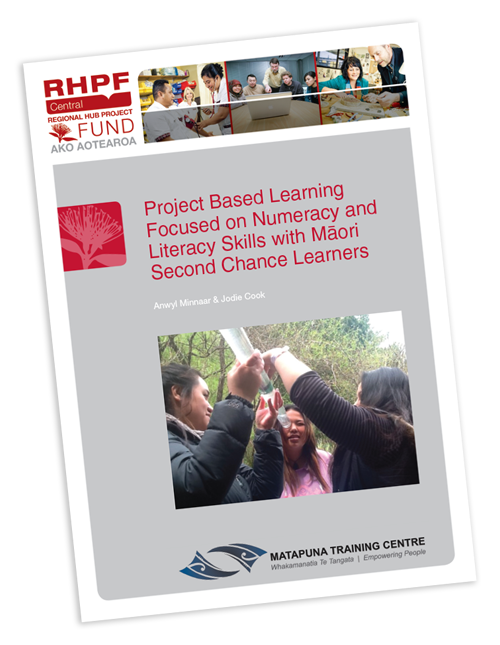
Project-based learning focused on numeracy and literacy skills with Māori second-chance learners

This report documents the evaluation of two integrated Project Based Learning (PBL) lessons created to engage Māori second chance learners.

The lessons include a strong numeracy and literacy focus as this is the major barrier stopping second-chance learners gaining a qualification. A Project based approach aimed to increase soft skills through practical group work and self-esteem through recognised achievement.

The accompanying resources details the two projects. These projects were designed to be easily sharable or replicated by others organisations.

Resource download:

Background:

A project completed in 2015, undertaken by Matapuna Training Centre, to create integrated Project-based Learning (PBL) experiences, which included a strong numeracy and literacy focus, that would engage Māori second-chance learners.

Report prepared by Anwyl Minnaar and Peter Howarth-Jarratt.


Co-funded by the Ako Aotearoa Regional Hub Project Fund (RHPF)

Posted in Language, Literacy and Numeracy (LLN) | Leave a comment

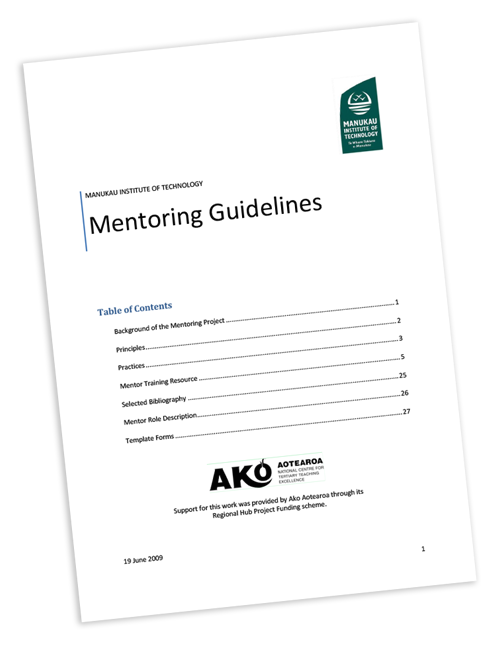
Professional development through mentoring support

This report documents the design and trial a mentoring programme for academic staff as a way of enhancing the student experience.

The Mentor Training Resource provides the framework used for the training of mentors at MIT. It may be of use for those looking to develop, or refine, training material relevant to their organisation.

Resource download:

Background:

A project completed in 2009, undertaken by Manukau Institute of Technology (MIT), that aimed to trial ‘Teaching Champions’ as mentors to develop the capacity of new teachers to self-reflect on their practice, and enhance new teachers’ long-term development with positive consequences for the learning experience of students.

Report prepared by Debra Robertson-Welsh and Mark Kirby.


Co-funded by the Ako Aotearoa Regional Hub Project Fund (RHPF)

Posted in Professional learning | Leave a comment

Professional learning opportunities for postgraduate specialist teachers

This report documents the development of a coaching resource that reflects the insights of what Field Advisors and postgraduate students find critical in their coaching relationship during students’ practicum.

The accompanying coaching resource aims to improve coaching relationships. Field Advisors and students are encouraged to use the coaching resource at their initial meeting to discuss their perspectives about expectations, preferred forms of communication, personal and professional goals, and the prior knowledge and skills that each individual can contribute to the relationship.

Resource download:

Background:

A two-year project, completed in 2020, to investigate the attributes that contribute to effective coaching relationships in supporting students’ Practicum.

A collaboration of University of Canterbury and Ministry of Education.

Report prepared by Dr Cara Swit.


Co-funded by the Ako Aotearoa Regional Hub Project Fund (RHPF)

Posted in Professional learning | Leave a comment

Professional supervision: A vehicle for facilitating change in teaching practice

This report documents research to examine how internal organisational processes such as professional supervision, co-inquiry and action research support more flexible and student-centred teaching pedagogies.

Download the report:

Supporting videos:

Background:

A project completed in 2009, undertaken by Universal College of Learning, to investigate the use of group supervision to focus academic staff on unpacking and critiquing their world of teaching in an ITP (Institutes of Technology and Polytechnics).

Report prepared by Michael O’Connell and Janet Walke. 


Co-funded by the Ako Aotearoa Regional Hub Project Fund (RHPF)

Posted in Professional learning | Leave a comment

Peer mentoring of at-distance students: A resource for Tertiary Institutions

This report is a practical guide for tertiary institutions establishing a student peer mentoring project. It focuses on the peer mentoring of at-distance students but is also relevant to on-campus student mentoring, and offers particular guidance in the mentoring of Māori students.

The resource includes examples from the pilot Extramural Student Peer Mentoring Project established by the Social Work programme at Massey University‟s Manawatu campus.

Download the report:

Background:

A project completed in 2011, undertaken by Massey University, to develop an extramural student peer mentoring project in the Social Work programme at Massey University in response to the problem of high rates of failure and non-completion among first-year students.

Report prepared by Tepora Pukepuke and Simon Nash.


Co-funded by the Ako Aotearoa Regional Hub Project Fund (RHPF)

Posted in Student engagement | Leave a comment

Peer mentoring: An effective approach to enhancing first-year student engagement and success

This report describes the evaluation of a peer mentoring programme and discusses how it impacts positively on the engagement and success of first-year students studying at a distance.

Download the report:

Background:

A project, completed in 2009 at The Open Polytechnic of New Zealand, that aimed to improve student engagement through a targeted support programme.

Report prepared by Catherine Ross and Ron Grant.


Co-funded by the Ako Aotearoa Good Practice Publication Grants scheme (GPPG)

Posted in Student engagement | Leave a comment

Delivering online courses through a collaboration of 6 TANZ Institutions using networked technology

This report documents the tutor and learner experiences of the myLearn Network of provision pilot project as well as those of support and administrative staff. It also covers the technical and administrative impact on institutions.

The myLearn pilot project was designed as a proof of concept for networking the Moodle eLearning environments of the six TANZ member institutions.

Download the report:

Background:

A project completed in 2009, undertaken by six TANZ member institutions, to investigate the impact of the myLearn Network of provision pilot on those institutions.

Report prepared by Keith Tyler-Smith and Jan Kent. 


Co-funded by the Ako Aotearoa Regional Hub Project Fund (RHPF)

Posted in Online learning | Leave a comment

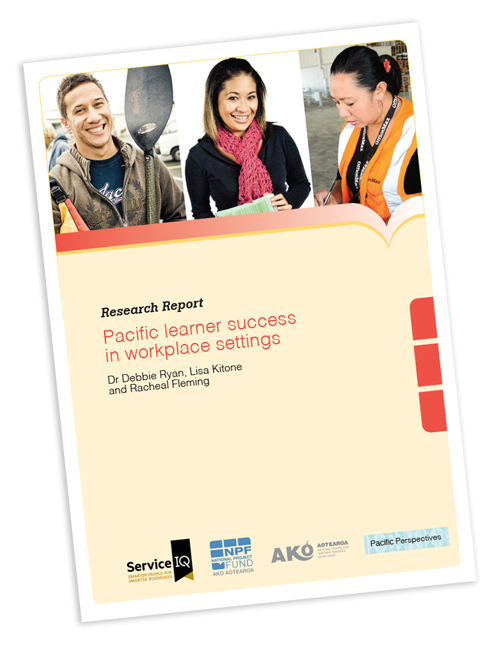
Pacific learner success in workplace settings

This report explores the critical success factors and effective teaching models for Pasifika learners involved in workplace training.

The thematic literature review provided an evidence-base for the identification and selection of initiatives, and help to inform the design of pilot initiatives.

Resource download:

Background:

A two-and-a-half-year project, completed in 2017, that aimed to better understand the links between interventions and retention, completion and higher achievement for Pasifika learners in workplace settings.

A collaboration involving ServiceIQ, The Skills Organisation, Careerforce, Competenz, and Pacific Perspectives Limited, a Pacific-owned and led consultancy.


Co-funded by the Ako Aotearoa National Project Fund (NPF)
Posted in Pacific learner success | Leave a comment